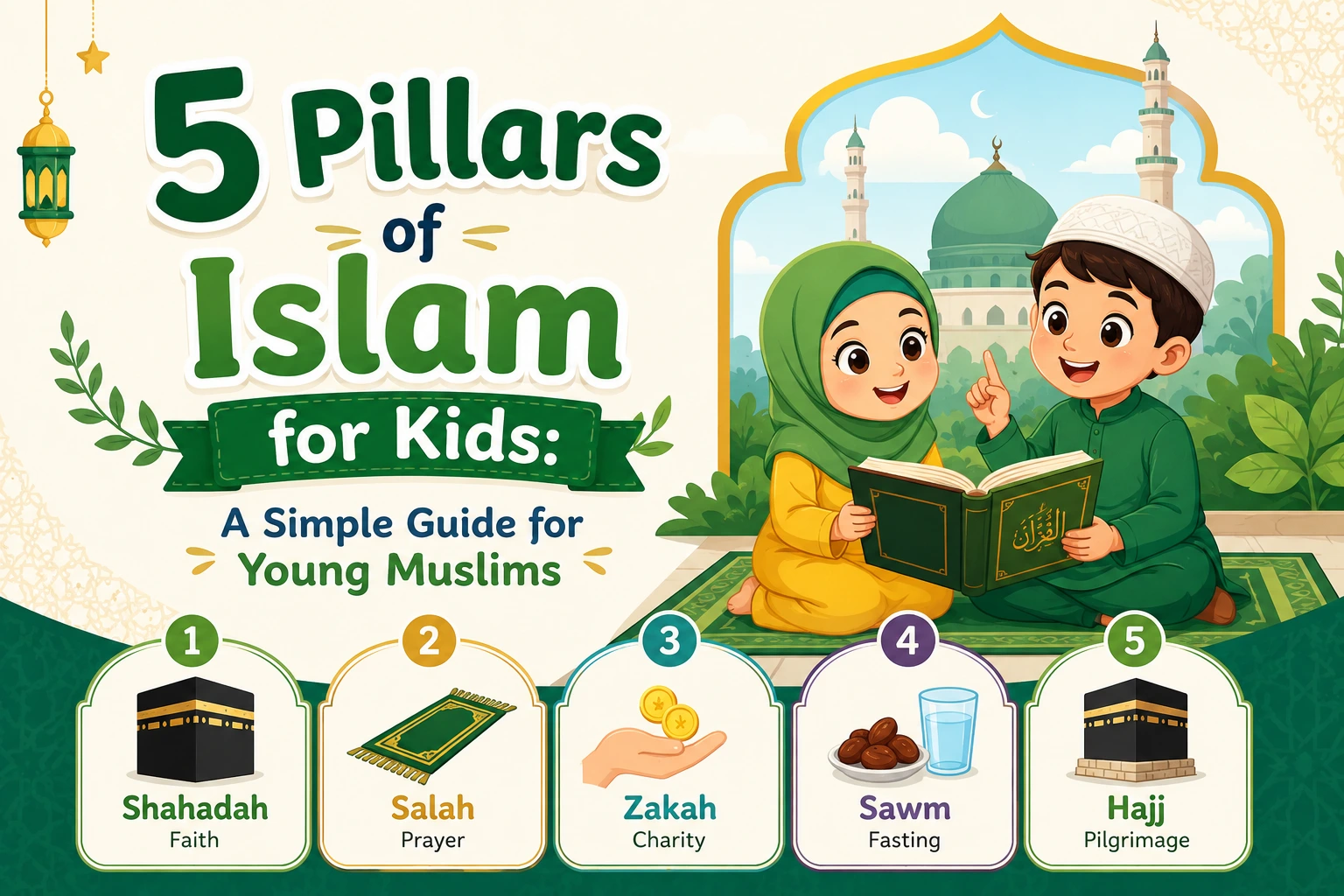
The Five Pillars of Islam are the foundation of a Muslim’s faith. They help children learn worship, good character, and gratitude early.
In this guide, we will explain the Five Pillars of Islam using simple language and examples. Whether you are a parent, teacher, or student, this article helps make learning about Islam fun and easy to understand. Let’s find out what the Five Pillars are and why they matter.
What Are the 5 Pillars of Islam?
The Five Pillars of Islam are five key acts that every Muslim learns about. They help Muslims build a good relationship with Allah and encourage honesty, kindness, patience, and caring in daily life.
The five pillars are:
- Shahadah (Faith)
- Salah (Prayer)
- Zakah (Charity)
- Sawm (Fasting)
- Hajj (Pilgrimage)
Think of these pillars like the strong legs of a table. Each one helps support a Muslim’s faith and daily life.
The 5 Pillars of Islam for Kids
1. Shahadah (Faith)
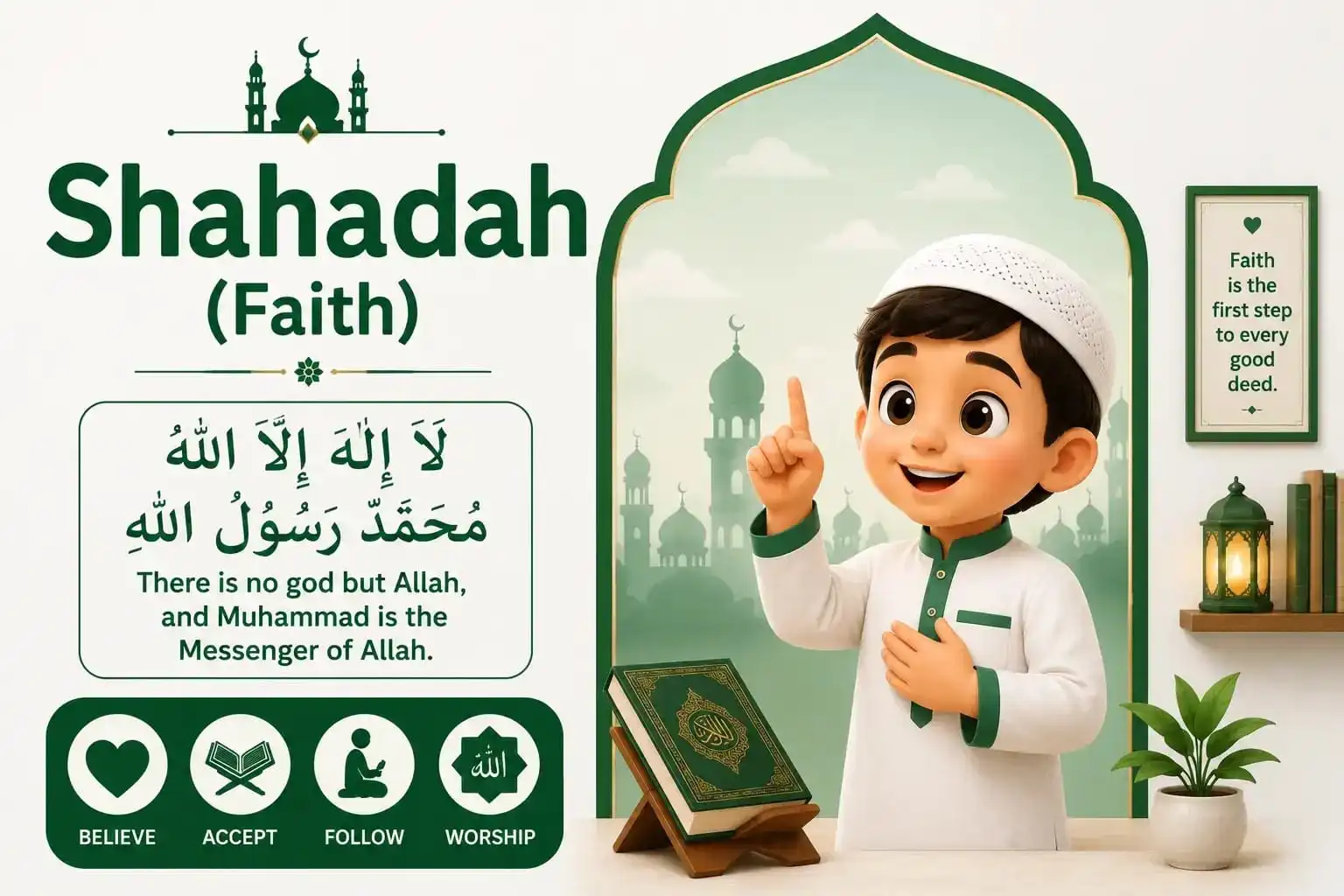
Shahadah is the first and most important pillar of Islam. It is the declaration of faith:
“There is no god but Allah, and Muhammad (peace be upon him) is His Messenger.”
This means Muslims believe that Allah is the only One worthy of worship and that Prophet Muhammad ﷺ was sent to guide humanity.
Example for Kids:
When you say the Shahadah with understanding and believe it in your heart, you are showing your faith in Allah.
2. Salah (Prayer)
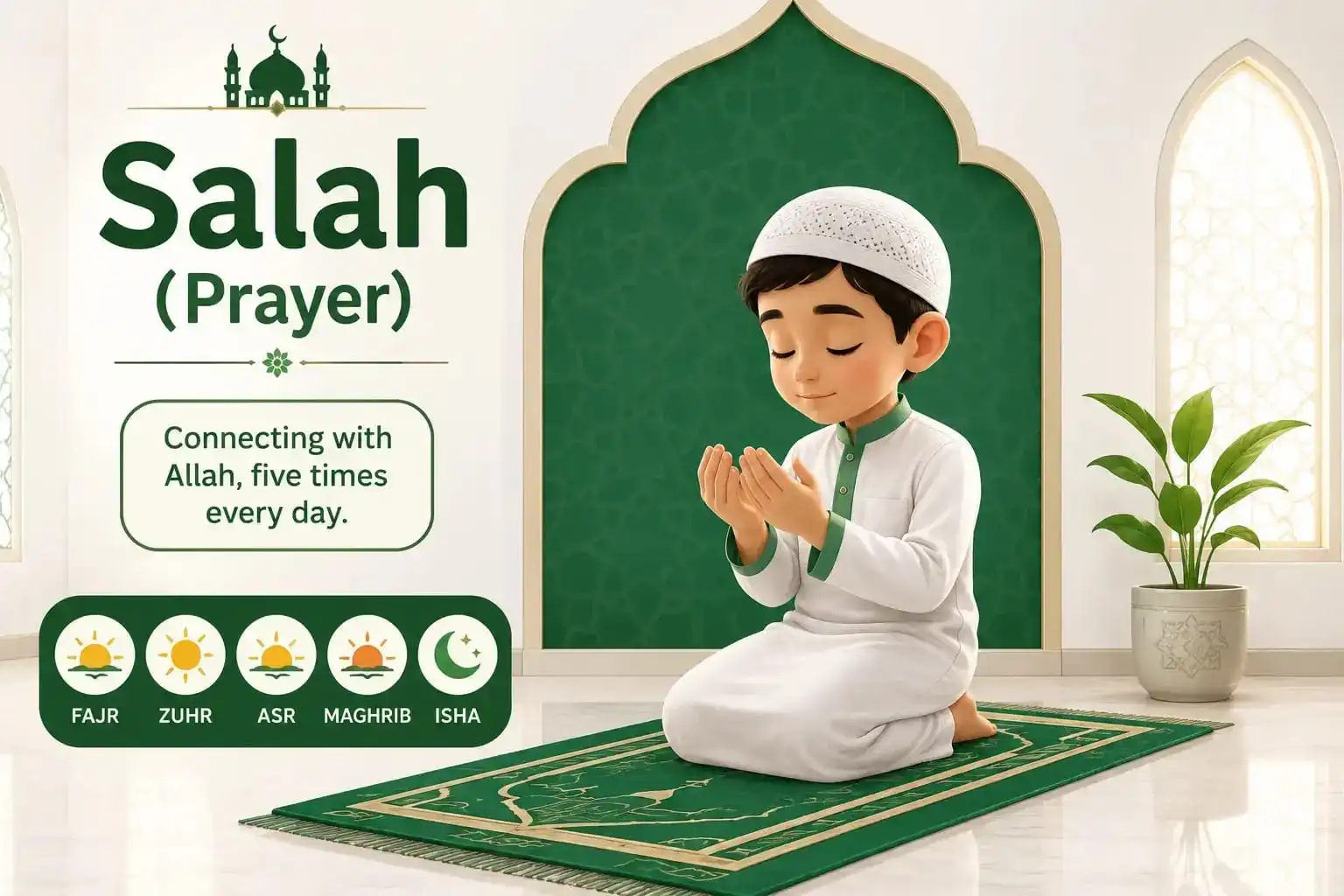
Salah is the second pillar of Islam. Muslims pray five times every day to remember Allah and thank Him for His blessings.
Prayer helps Muslims:
- Stay close to Allah.
- Build discipline.
- Find peace and gratitude.
Example for Kids:
You can pray with your parents and learn each prayer step by step. Even if you’re still learning, every effort counts.
3. Zakah (Charity)
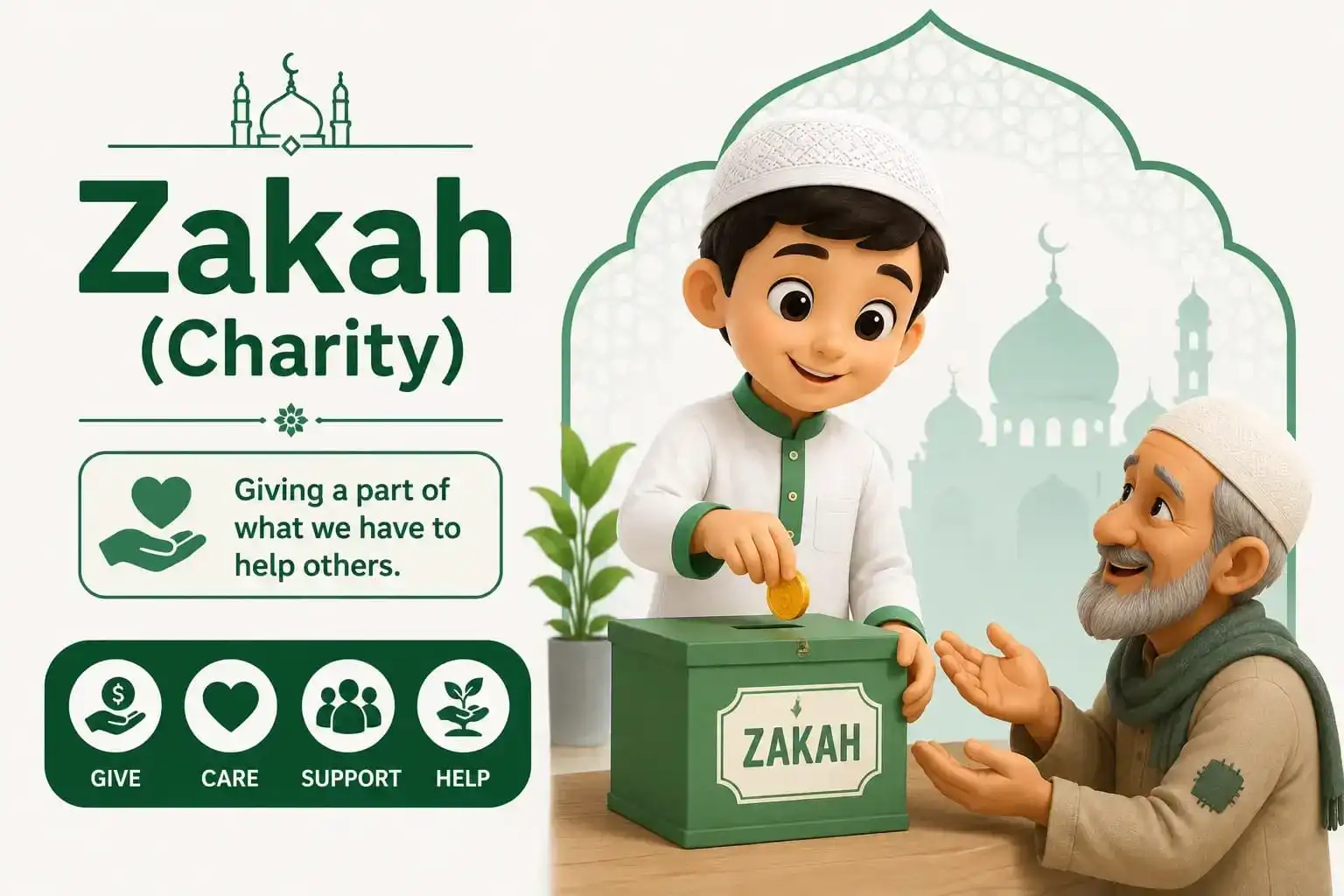
Zakah is the third pillar of Islam. It inspires us to joyfully assist those who are less fortunate. Adults who meet certain financial criteria eagerly share a portion of their wealth with those in need, spreading generosity and positivity throughout the community.
Children can also show they care by giving Sadaqah, which means giving to others.
Example for Kids:
Choose one way to help: share your toys, donate books, or save part of your allowance for someone in need. Ask an adult for help with donating. Small acts of kindness make a big difference.
4. Sawm (Fasting)
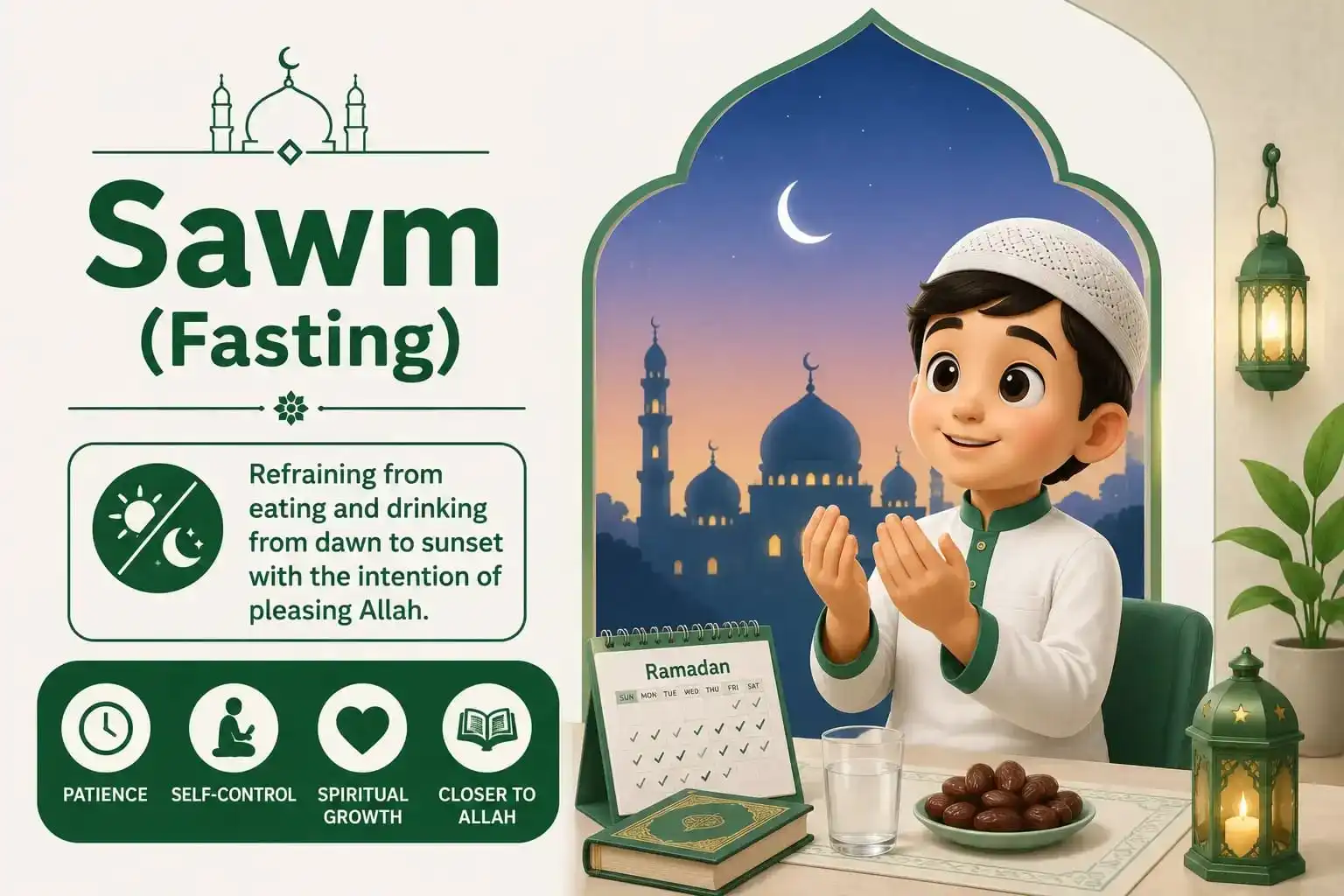
Sawm means joyfully fasting during the special month of Ramadan. Muslims who are old enough fast from dawn until sunset, kindly refraining from food and drink as an act of love for Allah.
Young children are not required to fast, but they can still take part in Ramadan by:
- Helping prepare iftar.
- Reading the Quran.
- Making extra duas.
- Being kind and patient.
Example for Kids:
If your parents say you’re ready, try a short practice fast with them! If not, enjoy Ramadan by focusing on good deeds, like helping around the house or making dua. Every small effort is worth celebrating!
5. Hajj (Pilgrimage)
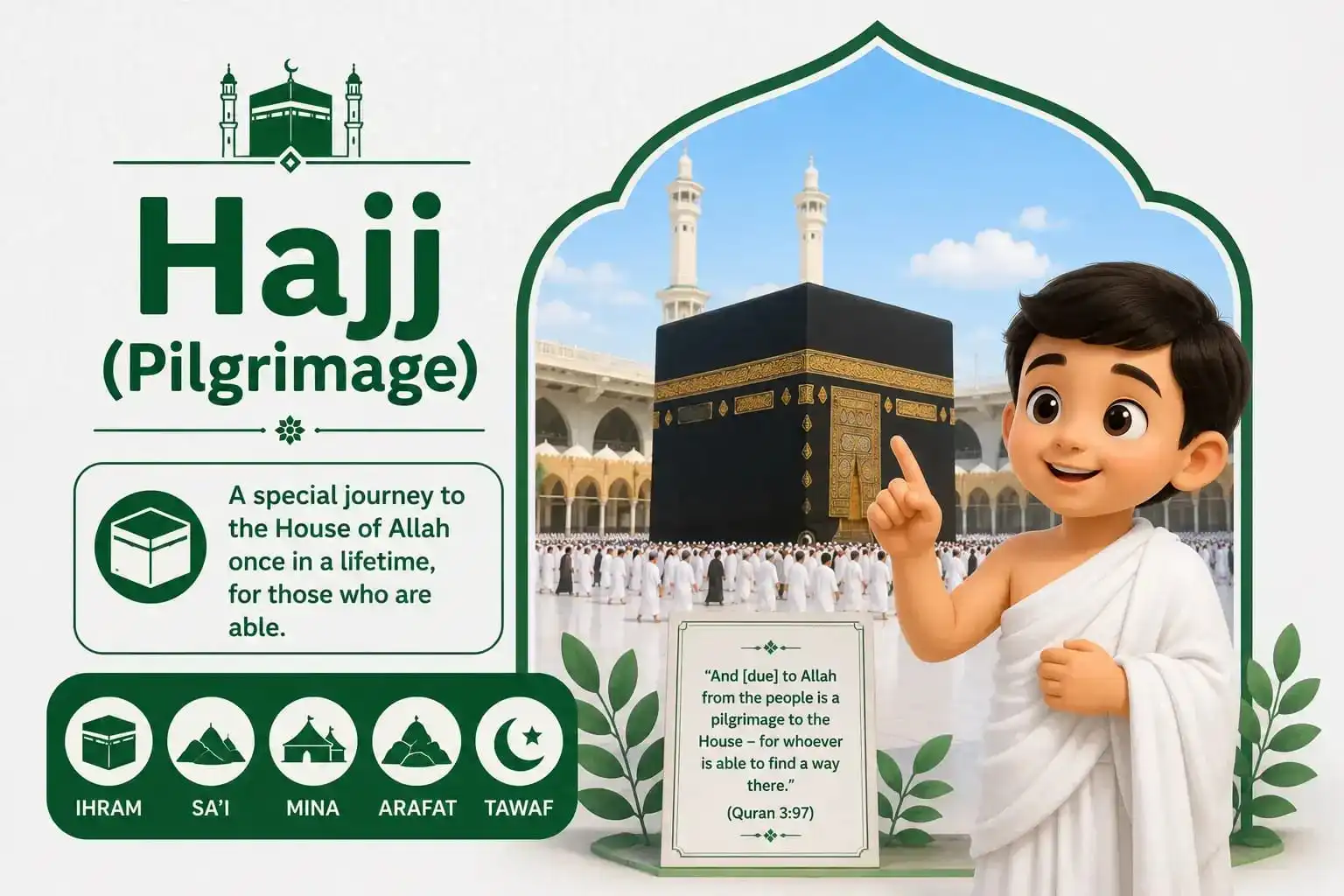
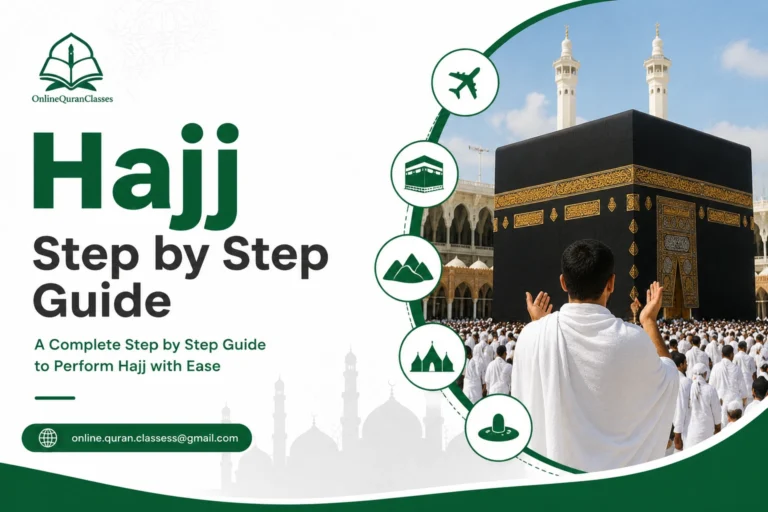
Hajj is the fifth pillar of Islam. It is an exciting and meaningful journey to the holy city of Makkah that Muslims eagerly hope to make at least once in their lives, if they are able.
Muslims worldwide gather for Hajj to worship Allah. It shows unity and equality.
Example for Kids:
Ask a parent or teacher to help you learn about Hajj. You can read stories together, watch educational videos, or create a model of the Kaaba as a craft project at home or school.
Why Are the Five Pillars Important?
The Five Pillars help Muslims:
- Strengthen their faith in Allah.
- Build good habits.
- Learn kindness and generosity.
- Practice patience and self-control.
- Feel connected to Muslims worldwide.
These pillars are not just acts of worship—they joyfully help shape a person’s character as they grow.
Easy Ways Kids Can Practice the Five Pillars
Children can begin practising the values of the Five Pillars every day by:
- Learning and memorising the Shahadah.
- Joining parents during Salah.
- Sharing with friends and helping those in need.
- Practising patience and good manners during Ramadan.
- Learning about Hajj through books, crafts, and educational activities.
Many families also choose Online Quran Classes to help children learn Islamic teachings from wonderful teachers in a fun and engaging way.
Fun Activities to Learn the 5 Pillars of Islam
Learning becomes more exciting with hands-on activities! Here are some ideas:
- Colour the Five Pillars chart.
- Make flashcards with the name of each pillar on one side and its meaning or example on the other. Use them to quiz yourself or your friends.
- Create a Five Pillars craft using colored paper by cutting out five shapes and labelling each one with a pillar’s name. Arrange them in a row to display.
- Play a matching game by writing pillar names and their meanings on separate pieces of paper. Mix them up and try to match each name to its meaning.
- Take a fun quiz by answering questions about each pillar after you’ve learned about it. Try making your own quiz questions and test family or friends.
- Read Islamic stories that teach honesty, kindness, and patience.
Parents may also consider enrolling children in a Noorani Qaida Course to help them build a strong foundation in Quran reading alongside their Islamic studies.
Key Takeaways
- The Five Pillars of Islam form the basis of a Muslim’s faith.
- They guide children in worship and character development.
- Learning one pillar at a time makes Islamic education enjoyable and meaningful.
- Parents and teachers have a loving and important role in helping children practice these values every day.
Conclusion
The Five Pillars of Islam give every young Muslim a loving, uplifting foundation. Learning about Shahadah, Salah, Zakah, Sawm, and Hajj helps children love their faith and develop kindness, patience, gratitude, and responsibility. With support from family and teachers, kids can joyfully embrace Islam and build habits that make life meaningful and happy.
Frequently Asked Questions
What are the Five Pillars of Islam?
The Five Pillars are Shahadah, Salah, Zakah, Sawm, and Hajj. They are central to a Muslim’s faith and practice.
Why are the Five Pillars important?
They teach Muslims to worship Allah and develop good character through kindness, honesty, and gratitude.
At what age should kids learn the Five Pillars?
Children can begin learning about the Five Pillars as soon as they can understand simple concepts. Lessons should be age-appropriate and engaging.
Do children have to fast during Ramadan?
No. Children are generally not required to fast until they reach puberty. However, many enjoy participating in other Ramadan activities and learning about the month’s importance.
Can children pray Salah?
Yes. Children are encouraged to learn Salah from an early age and gradually develop the habit of praying with their family.