The Kaaba is the spiritual heart of Islam and one of the most recognised religious structures in the world. Every day, millions of Muslims face it during their five daily prayers, and every year, millions more travel to Makkah to perform Hajj and Umrah. Despite its global significance, many people wonder about its origins, purpose, history, and the meaning of the Black Stone embedded in one of its corners.
This article explores the Kaaba’s history, who built it, what lies within, the significance of the Black Stone, and why the Kaaba continues to unite Muslims across cultures and nations.
What Is the Kaaba?
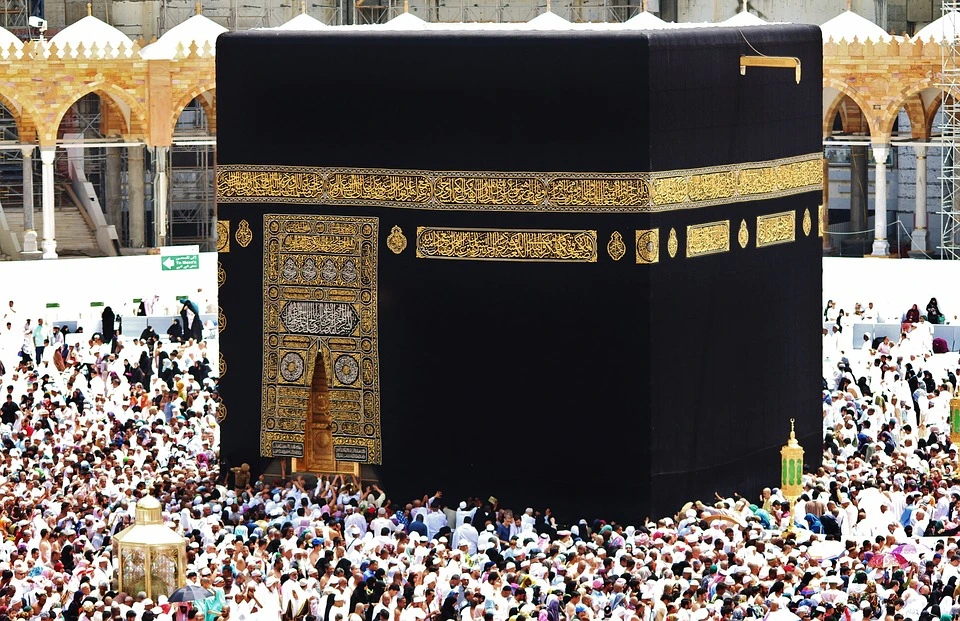
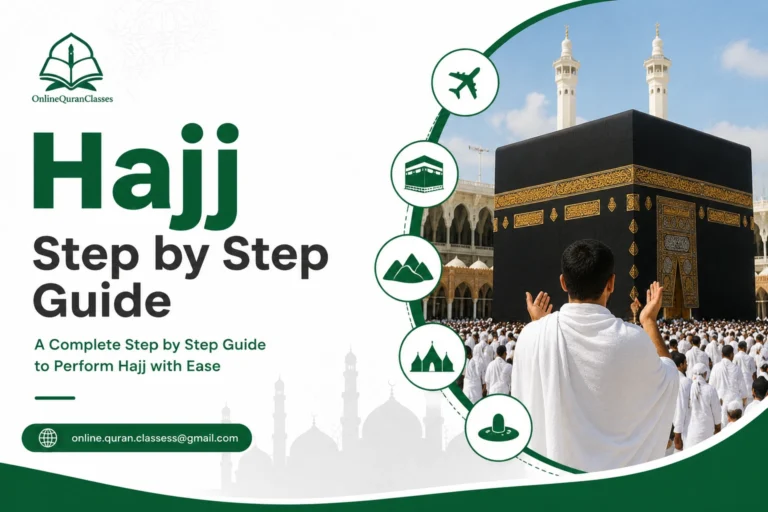
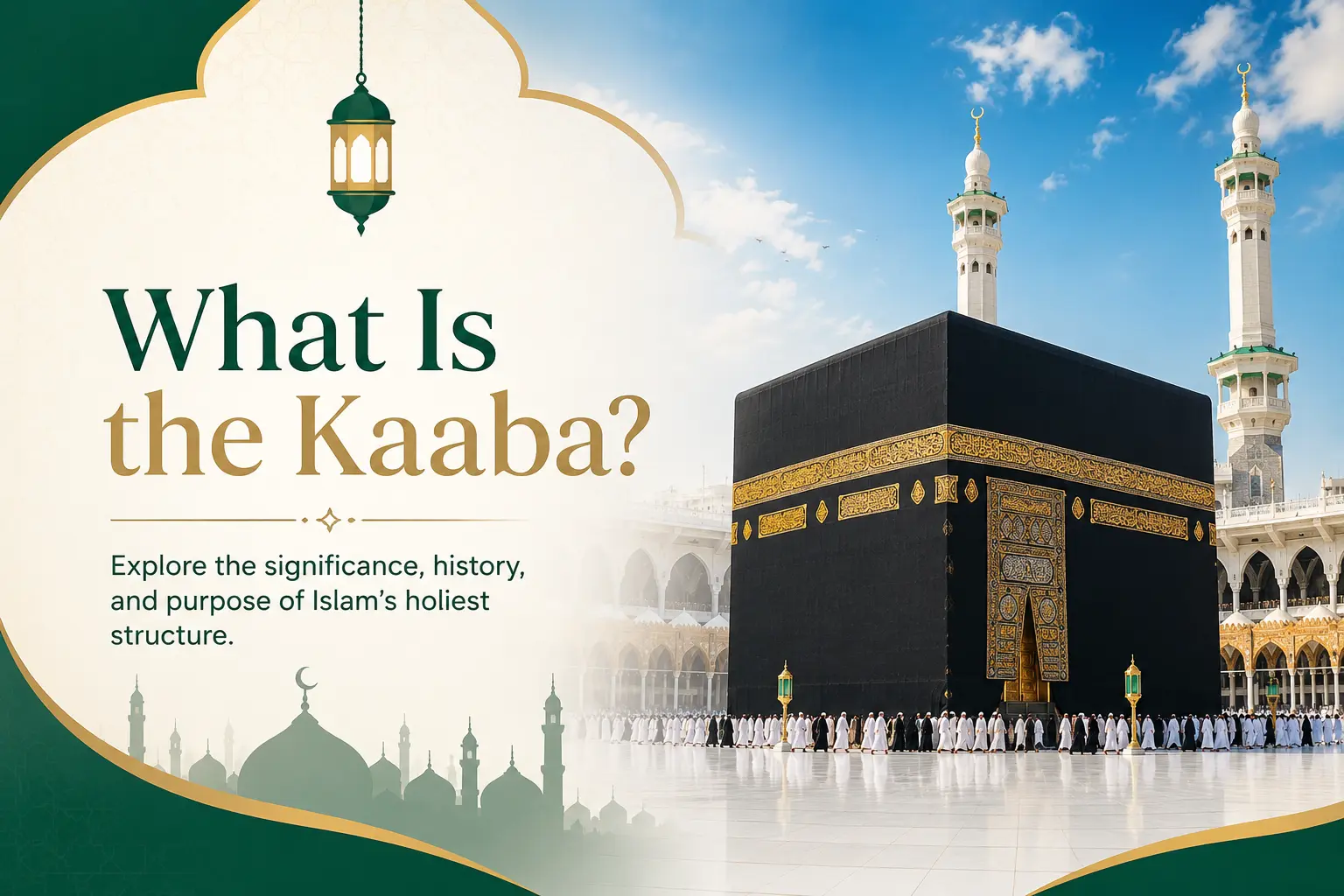
The Kaaba is a cube-shaped sacred structure located at the centre of Masjid al-Haram. It serves as the Qiblah, the direction Muslims face during prayer.
The word “Kaaba” comes from the Arabic word meaning “cube,” reflecting its simple geometric shape. Covered with a black silk cloth known as the Kiswah, the Kaaba symbolises the unity of believers who worship one God.
Although the building itself is made of stone, its religious significance stems from Allah’s command that it be the focal point of Islamic worship, rather than from the materials used in its construction.
Where Is the Kaaba Located?
The Kaaba stands in the centre of Masjid al-Haram in Makkah, the holiest city in Islam. Muslims around the world face this direction whenever they pray, regardless of where they live.
Every year, pilgrims gather around the Kaaba during Hajj and Umrah, performing Tawaf by walking around it seven times in a counterclockwise direction. This act symbolises devotion to Allah and the unity of the Muslim community.
Why Is the Kaaba Important in Islam?
The Kaaba holds immense religious significance for several reasons.
It is the direction of prayer for all Muslims, regardless of location.
It is also the destination for Hajj, a Pillar of Islam required at least once if able.
Third, the Kaaba represents the worship of one God. It reminds Muslims of the legacy of the Prophets Ibrahim (Abraham) and Ismail (Ishmael), who dedicated themselves to monotheism.
Many Muslims preparing for the pilgrimage also consider various Umrah package options offered by travel agencies as they plan their journey.
Who Built the Kaaba?
The Prophet Ibrahim and his son Ismail are credited with rebuilding the Kaaba under Allah’s command.
According to the Quran, Allah instructed Prophet Ibrahim to raise the foundations of the sacred house together with his son. As they built it, they prayed for Allah to accept their efforts and make future generations devoted to Him.
Islamic tradition also mentions that the original foundations may have existed even earlier, with some scholars stating that the first sanctuary was established before Prophet Ibrahim. However, the rebuilding by Ibrahim and Ismail marks the beginning of the Kaaba as the centre of Islamic worship.
Later, Muhammad played a significant role before prophethood when the Kaaba was repaired after flood damage. During a dispute over who should return the Black Stone to its place, he wisely resolved the conflict by having representatives of each tribe lift it together before placing it himself.
How Has the Kaaba Been Rebuilt Throughout History?
Throughout history, the Kaaba has undergone several reconstructions due to floods, natural disasters, and structural wear.
Reconstruction by the Quraysh
About five years before the Prophet Muhammad’s mission began, heavy flooding weakened the building. The Quraysh tribe reconstructed it using stronger materials while maintaining its sacred status.
Early Islamic Period
During the first Islamic century, political conflicts led to damage that required further rebuilding. Different rulers restored the structure while attempting to preserve its original foundations.
Ottoman Renovation
In the seventeenth century, severe flooding caused additional structural problems. The Ottoman rulers carried out major restoration work, much of which forms the basis of today’s structure.
Modern Maintenance
The Saudi authorities regularly inspect and preserve the Kaaba. While its appearance has remained largely unchanged, continuous maintenance ensures its safety for millions of pilgrims.
What Is Inside the Kaaba?
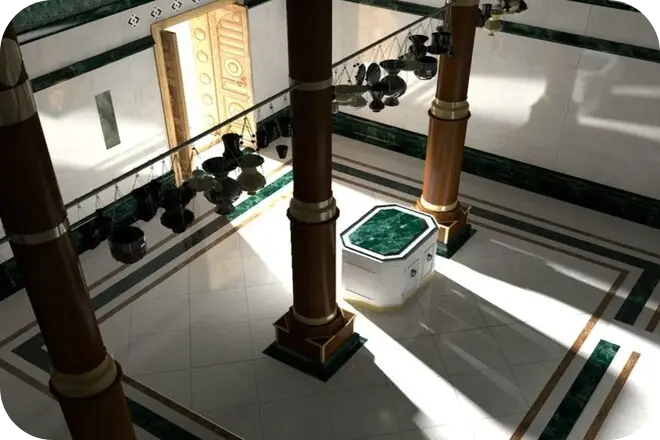
Unlike what many people imagine, the inside of the Kaaba is relatively simple.
Inside are:
- Three wooden pillars support the roof.
- Marble flooring.
- Hanging lamps and lanterns.
- Fragrant perfumes are used during ceremonial cleaning.
- Walls decorated with elegant inscriptions.
There are no permanent prayer halls, furniture, or elaborate decorations. Access to the interior is extremely limited and is generally reserved for special occasions and invited guests.
The simplicity of the interior reflects Islam’s emphasis on worshipping Allah rather than objects or buildings.
What Is the Black Stone (Hajar al-Aswad)?
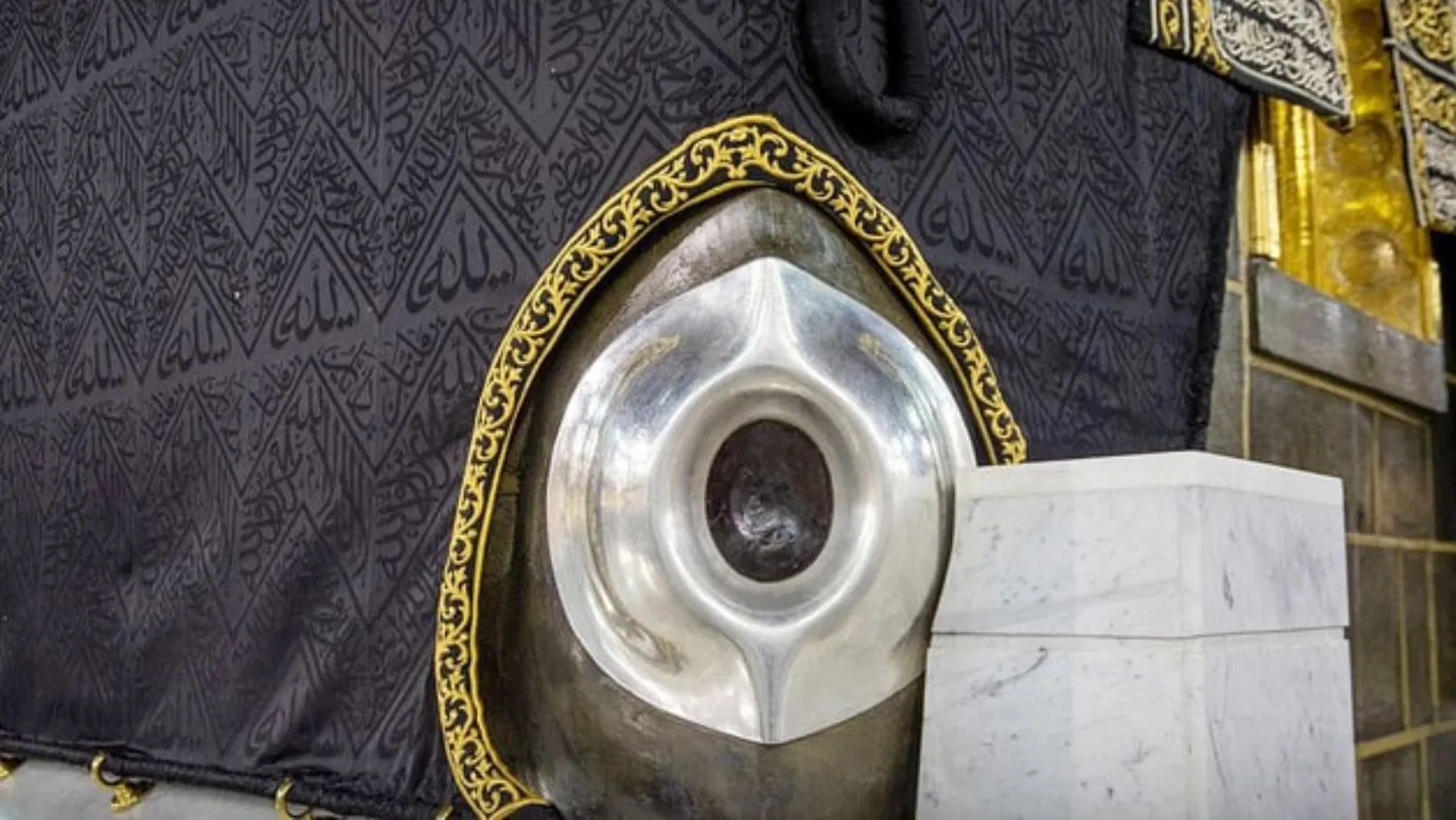
Black Stone, known in Arabic as Hajar al-Aswad, is embedded in the eastern corner of the Kaaba.
The stone is dark in colour and surrounded by a silver frame that helps hold its fragments together after centuries of natural wear and historical damage.
According to Islamic tradition, the Black Stone is a sacred object believed to have been sent from Paradise and originally white before becoming dark over time. While its exact geological origin remains uncertain, its religious significance stems from its association with the Prophets Ibrahim and Muhammad, and it serves as a focal point for pilgrims during Hajj.
It is important to understand that Muslims do not worship the Black Stone. Rather, the Black Stone is honoured for its historical and spiritual significance, as the Prophet respected it during Tawaf.
Why Do Muslims Kiss or Point Toward the Black Stone?
During Tawaf, many pilgrims try to kiss the Black Stone if they can reach it safely.
When the area is crowded, Muslims simply point toward it while saying “Allahu Akbar.” This practice follows the example of Prophet Muhammad and avoids harming other pilgrims.
The famous companion Umar ibn al-Khattab beautifully explained this understanding by saying that the stone neither benefits nor harms anyone, and he kissed it only because he saw the Prophet do so.
This statement clearly shows that reverence for the Black Stone is an act of following prophetic tradition rather than worship.
Common Misconceptions About the Kaaba
Several misconceptions surround the Kaaba.
Muslims Worship the Kaaba
This is false. Muslims worship Allah alone. The Kaaba serves only as the unified direction for prayer.
The Black Stone Grants Miracles
Islam teaches that blessings come from Allah, not from objects. The Black Stone is respected because of its historical and religious significance.
Only Arabs Can Visit the Kaaba
Muslims from every race, nationality, and language perform Hajj and Umrah. Islam welcomes believers from all backgrounds.
The Kaaba Has Never Changed
Although its location has remained constant, the structure has been repaired and rebuilt several times throughout history.
Interesting Facts About the Kaaba
- The Kaaba is covered with a black silk cloth called the Kiswah, which is replaced annually.
- It stands approximately 13 meters (43 feet) high.
- Millions of Muslims face the Kaaba five times every day.
- The Kaaba’s door is positioned above ground level.
- The interior is cleaned several times each year using traditional perfumes and rose water.
- Pilgrims circle the Kaaba seven times during Tawaf.
- The Kaaba has remained the spiritual centre of Islam for more than fourteen centuries.
Many people learning about the pilgrimage often wonder, “What is Umrah in Islam?” This question commonly arises for new learners seeking to understand the difference between Umrah and Hajj.
Conclusion
The Kaaba is far more than a remarkable architectural landmark. It represents faith, unity, devotion, and the legacy of the prophets who dedicated themselves to the worship of one God. From its rebuilding by the Prophets Ibrahim and Ismail to its role as the Qiblah for over a billion Muslims, the Kaaba remains the spiritual centre of Islam.
Understanding what lies within the Kaaba, the history behind its construction, and the significance of the Black Stone helps dispel common misconceptions and provides a deeper appreciation of Islamic tradition. Whether someone is studying Islam, preparing for pilgrimage, or simply curious about one of the world’s most sacred places, learning about the Kaaba offers valuable insight into the beliefs and practices that unite Muslims across the globe.
For those wishing to deepen their understanding of Islam beyond pilgrimage, enrolling in an Online Quran Academy can provide structured learning about the Quran, prophetic traditions, and Islamic history.
Frequently Asked Questions
Can non-Muslims enter the Kaaba?
No. Entry into the holy city of Makkah is restricted to Muslims.
How often is the Kaaba cleaned?
The Kaaba is ceremonially cleaned several times each year using traditional methods.
Is the Black Stone the original stone from Paradise?
Islamic tradition states that it was sent from Paradise, although its physical composition has been the subject of historical discussion.
Why do Muslims walk around the Kaaba seven times?
This ritual, known as Tawaf, follows the practice established by the Prophet Muhammad during pilgrimage.
Can anyone go inside the Kaaba?
Access is highly restricted and generally limited to invited guests during special occasions.