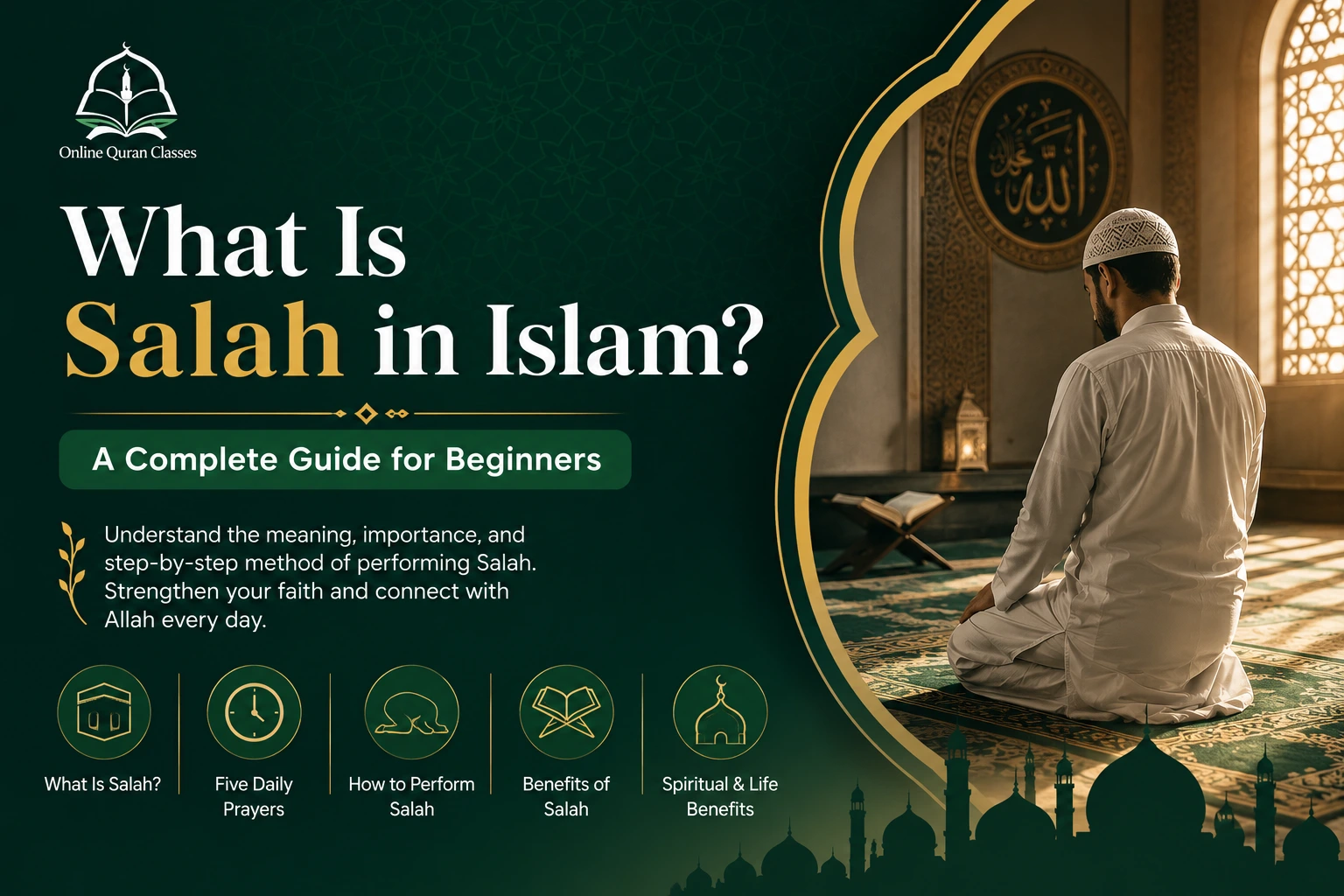
Salah is a key act of worship in Islam and forms a direct link between a Muslim and Allah. Performed five times daily, it reinforces faith, gratitude, and obedience. Understanding Salah helps strengthen one’s relationship with the Creator.
What is Salah? Why is it important for Muslims? How do you perform it, and what are its benefits?
This guide teaches you the meaning, importance, and correct way to perform Salah in Islam.
What Is Salah in Islam?
Salah, often translated as “prayer,” is the obligatory act of worship that Muslims perform five times a day. It is the second pillar of Islam and serves as a foundation of a believer’s faith and daily life.
The Arabic word “Salah” means supplication, connection, and devotion. Unlike informal prayers or personal requests to Allah, which are flexible in wording and form, Salah adheres to a specific structure with Quranic recitations, defined physical movements, and prescribed timings.
Every mentally sound adult Muslim is required to perform the five daily prayers, unless exempted for recognized circumstances recognized in Islamic teachings.
The Importance of Salah in Islam
Salah holds a special place, having been directly commanded by Allah during the Night Journey and Ascension (Isra and Mi’raj) of the Prophet.
Salah is not just a ritual. It builds discipline, strengthens faith, and reminds you of your ultimate purpose in life.
Allah says in the Quran:
“Indeed, prayer prohibits immorality and wrongdoing, and the remembrance of Allah is greater.” (Quran 29:45)
Regular prayer helps Muslims develop self-control, humility, gratitude, and a sense of awareness of Allah in daily life.
Salah: The Second Pillar of Islam
Islam is built upon five pillars:
- Shahadah (Declaration of Faith)
- Salah (Prayer)
- Zakah (Charitable Giving)
- Sawm (Fasting during Ramadan)
- Hajj (Pilgrimage to Makkah)
Salah is unique among the pillars as it is practiced daily, renewing a Muslim’s commitment to Allah.
The Prophet Muhammad (peace be upon him) emphasized the importance of prayer, describing it as the distinguishing mark between faith and disbelief.
The Five Daily Prayers Explained
Muslims perform five obligatory prayers each day at designated times.
1. Fajr
Fajr is the pre-sunrise prayer with two rak’ahs, starting the day with gratitude to Allah.
2. Dhuhr
Dhuhr is the midday prayer offered after the sun passes its highest point. It consists of four obligatory rak’ahs.
3. Asr
Asr, the afternoon prayer with four rak’ahs, provides a spiritual pause during busy routines.
4. Maghrib
Maghrib is prayed immediately after sunset and consists of three obligatory rak’ahs.
5. Isha
Isha is the night prayer after twilight, with four rak’ahs to conclude daily worship.
These prayers, spread throughout the day, keep Muslims connected to Allah.
Conditions for a Valid Salah
You must meet certain conditions for Salah to be valid.
Purification (Taharah)
A Muslim must be in a state of ritual purity. This is achieved through Wudu (ablution), which involves washing specific parts of the body.
Clean Clothing and Place
Clothes and the place of prayer must be clean.
Covering the Awrah
Men and women must dress modestly during Salah.
Facing the Qiblah
Muslims pray facing the Ka’bah in Makkah, known as the Qiblah.
Intention (Niyyah)
A sincere intention in the heart to perform the specific prayer is essential.
Praying at the Correct Time
Observe each Salah at the designated time.
How to Perform Salah Step by Step
For beginners, Salah may seem overwhelming, but with practice, it becomes natural.
Step 1: Make Wudu
Perform ablution by washing the hands, mouth, nose, face, arms, wiping the head, ears, and washing the feet.
Step 2: Form the Intention
Silently intend which prayer you are about to perform.
Step 3: Begin with Takbir
Raise your hands and say:
“Allahu Akbar”
(Allah is the Greatest)
Step 4: Recite Surah Al-Fatiha
Recite Surah Al-Fatiha, then another Quran portion.
Step 5: Bow (Ruku)
Bend forward while glorifying Allah.
Step 6: Stand Again
Rise from bowing and praise Allah.
Step 7: Prostrate (Sujood)
Forehead, nose, palms, knees, and toes touch the ground in submission.
Step 8: Sit Briefly
Sit between the two prostrations and make supplication.
Step 9: Perform the Second Sujood
Prostrate once more.
Step 10: Complete the Required Rak’ahs
Repeat as needed for the required rak’ahs.
Step 11: End with Tasleem
Turn the head to the right and left, saying:
“Assalamu Alaikum wa Rahmatullah.”
This ends your prayer.
The Spiritual Benefits of Salah
Salah offers benefits beyond physical worship.
Strengthens Faith
Regular prayer increases trust in Allah and reinforces belief.
Brings Inner Peace
Salah provides comfort in tough times and relieves stress.
Develops Discipline
Praying at fixed times teaches punctuality and responsibility.
Encourages Good Character
Prayer encourages avoiding sin and pursuing righteousness.
Promotes Gratitude
Salah is a time to thank Allah for blessings.
Builds Community
Group prayers build bonds and unity within the community.
Common Mistakes Beginners Should Avoid
Beginners may make mistakes while learning Salah. Focus on steady improvement.
Some common mistakes include:
- Rushing through prayer movements.
- Neglecting concentration and sincerity.
- Forgetting the proper sequence of actions.
- Performing Salah outside its prescribed time without a valid reason.
- Incomplete purification before prayer.
Learn from knowledgeable teachers and practice regularly to improve.
Online Quran classes in the UK help children learn Islamic teachings and Salah.
Tips for Building Consistency in Salah
Building prayer habits takes dedication.
Here are a few practical tips:
- Set reminders for prayer times.
- Learn one prayer at a time if you are a beginner.
- Pray with family members whenever possible.
- Visit the mosque regularly.
- Reflect on the meanings of the verses recited.
- Ask Allah for steadfastness and guidance.
With consistency, Salah becomes a valued source of comfort and spiritual fulfillment rather than just an obligation.
Conclusion
Salah is more than a routine; it’s a sacred meeting with Allah, offering guidance and spiritual growth.
For beginners, learning Salah may require patience and practice, but every effort to seek closeness to Allah is immensely rewarding. By understanding its meaning, observing its conditions, and performing it sincerely, Muslims can experience the profound beauty and blessings that Salah brings into everyday life.
Whether you are new to Islam or want to strengthen your worship, practice Salah to deepen your faith.
Frequently Asked Questions
Can new Muslims pray even if they haven’t memorized everything?
Yes. Beginners should learn gradually and do their best while continuing to improve.
Can Salah be performed anywhere?
Yes, as long as the place is clean and suitable for prayer.
What happens if a prayer is missed?
A missed prayer should be made up as soon as possible, accompanied by sincere repentance if missed intentionally.
Is praying in the mosque mandatory?
For men, congregational prayer is highly encouraged. Women may pray at home or in the mosque.
Why is Salah repeated five times daily?
The five daily prayers ensure that remembrance of Allah remains central throughout the day.