The evil eye (Al-‘Ayn) is real in Islam and refers to harm caused by someone’s envious or admiring gaze, with Allah’s permission. Islam guides Muslims to seek protection through sincere supplication and remembrance of Allah, not charms or unsupported practices.
This guide covers the meaning of the evil eye, authentic duas, Quranic verses, Sunnah ruqyah, protection for children and families, misconceptions, and provides Arabic supplications with translation and references.
What Is the Evil Eye in Islam?
Meaning of Al-‘Ayn
The Arabic word Al-‘Ayn literally means “the eye.” In Islamic terminology, it refers to harm that may affect a person due to someone’s gaze, whether accompanied by envy or excessive admiration, by Allah’s decree.
Islam teaches believers to recognise its reality while remembering that nothing happens except by Allah’s will.
Is the Evil Eye Real According to Islam?
The Prophet ﷺ affirmed its existence.
He said:
“The evil eye is real.”
(Sahih al-Bukhari, Sahih Muslim)
This hadith leaves no doubt that the evil eye exists. However, Muslims must distinguish between authentic Islamic teachings and superstition. No illness, hardship, or difficulty should be automatically blamed on the evil eye. Islam encourages believers to seek spiritual remedies while also seeking appropriate medical treatment whenever necessary.
Quranic Evidence About Protection from the Evil Eye
Although the Quran does not mention a specific phrase called the “evil eye dua,” it teaches believers to seek Allah’s protection through His words.
Among the most commonly recited chapters are:
- Surah Al-Falaq
- Surah An-Nas
- Ayat al-Kursi
- The last two verses of Surah Baqarah
These verses remind Muslims that Allah is the ultimate Protector. Reciting them strengthens faith and reliance on Him.
Best Dua for Evil Eye (Authentic Sunnah)
Dua in Arabic
أَعُوذُ بِكَلِمَاتِ اللَّهِ التَّامَّاتِ مِنْ شَرِّ مَا خَلَقَ
Transliteration
A’udhu bi kalimatillahit-tammati min sharri ma khalaq.
English Translation
“I seek refuge in the perfect words of Allah from the evil of what He has created.”
Reference
Sahih Muslim.
When to Recite It
- Morning
- Evening
- When entering a new place
- Whenever seeking Allah’s protection
Protection Dua for Children
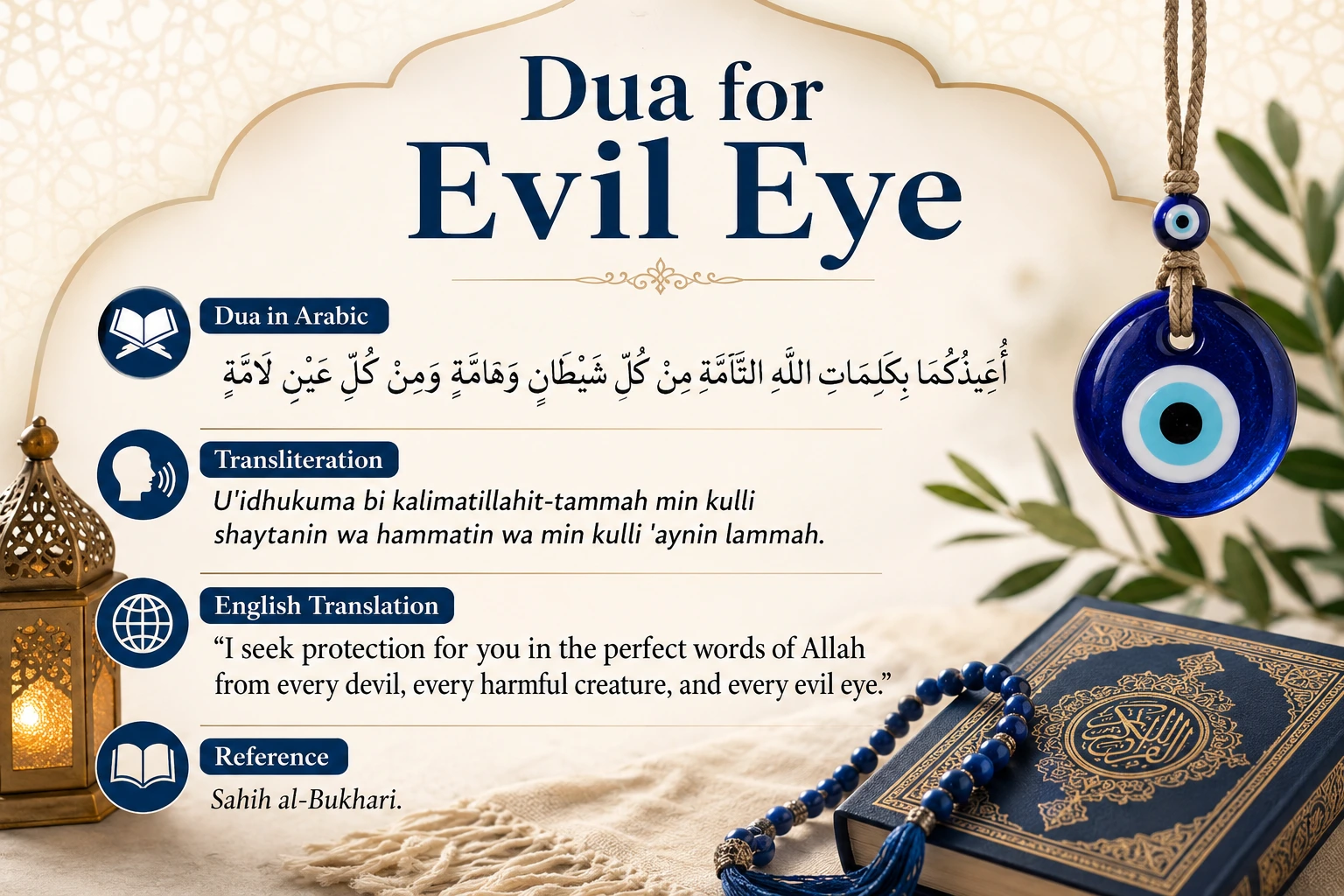
Dua in Arabic
أُعِيذُكُمَا بِكَلِمَاتِ اللَّهِ التَّامَّةِ مِنْ كُلِّ شَيْطَانٍ وَهَامَّةٍ وَمِنْ كُلِّ عَيْنٍ لَامَّةٍ
Transliteration
U’idhukuma bi kalimatillahit-tammah min kulli shaytanin wa hammatin wa min kulli ‘aynin lammah.
English Translation
“I seek protection for you in the perfect words of Allah from every devil, every harmful creature, and every evil eye.”
Reference
Sahih al-Bukhari.
When to Recite It
It is recommended that parents recite this dua over their children daily, especially before bedtime.
Morning and Evening Adhkar
The Prophet ﷺ taught numerous authentic supplications to be recited every morning and evening. These adhkar form one of the strongest daily shields against harm, including the evil eye.
Surahs That Help Protect Against the Evil Eye
Surah Al-Falaq
This chapter seeks Allah’s protection from every form of external harm, including envy.
Surah An-Nas
This surah asks Allah to protect believers from the whispers of Satan and hidden evil.
Ayat al-Kursi
Ayat al-Kursi (Quran 2:255) is among the greatest verses of the Quran. Authentic narrations state that whoever recites it before sleeping receives Allah’s protection throughout the night.
Last Two Verses of Surah Al-Baqarah
The Prophet ﷺ said that reciting the last two verses of this chapter at night will suffice for him (Sahih al-Bukhari).
How to Perform Ruqyah for the Evil Eye
Step 1: Make a Sincere Intention
Begin by placing your trust entirely in Allah.
Step 2: Recite Authentic Duas
Recite:
- Surah Al-Falaq
- Surah An-Nas
- Al-Ikhlas
- Ayat al-Kursi
- Authentic supplications from the Sunnah
Step 3: Blow into the Hands
After recitation, lightly blow into your hands as practised by the Prophet ﷺ.
Step 4: Wipe Over the Body
Wipe your hands over your face and body as much as possible.
Step 5: Repeat Morning and Evening
Consistency is one of the keys to maintaining spiritual protection.
Dua for Evil Eye for Children
The Prophet ﷺ regularly sought Allah’s protection for Hasan and Husayn using the authentic supplication mentioned earlier.
Parents may lovingly recite this dua over their children every morning, before bedtime, or whenever they wish to ask Allah for protection.
Dua for Evil Eye for Babies
Islam encourages parents to protect newborns through authentic practices.
Recommended Sunnah actions include:
- Reciting the Quran regularly.
- Making authentic supplications.
- Remembering Allah frequently.
- Avoiding innovations and unsupported rituals.
There is no authentic evidence of the need for special amulets or objects for protection.
Dua for Evil Eye for Yourself
Every Muslim should develop a daily routine that includes:
- Morning adhkar
- Evening adhkar
- Ayat al-Kursi
- Three Quls
- Daily Quran recitation
- Regular prayers
Consistency is more beneficial than occasional recitation.
Dua for Evil Eye for Family Members
You may sincerely ask Allah to protect:
- Husband
- Wife
- Parents
- Children
- Siblings
- Relatives
You can ask Allah to protect any loved ones. Allah loves those who remember Him often.
Signs of the Evil Eye in Islam
Islam confirms the reality of the evil eye but does not provide a fixed checklist of symptoms.
Some wrongly blame every illness or problem on the evil eye. Do not jump to conclusions without evidence.
If someone experiences physical or emotional illness, they should:
- Seek medical care.
- Continue authentic ruqyah.
- Maintain regular worship.
- Trust Allah’s wisdom.
Both spiritual remedies and medical treatment may be pursued together.
Difference Between Evil Eye, Hasad, and Sihr
| Topic | Evil Eye | Hasad | Sihr |
| Meaning | Harm caused through a person’s gaze by Allah’s permission | Envy and wishing blessings to disappear | Magic performed using prohibited means |
| Intention | May occur intentionally or unintentionally | Intentional jealousy | Intentional act |
| Islamic Evidence | Authentic hadith | Quran and Sunnah | Quran and Sunnah |
| Protection | Quran, Sunnah, ruqyah, duas | Dhikr, dua, trust in Allah | Authentic ruqyah and seeking Allah’s help |
Daily Sunnah Habits That Protect Against the Evil Eye
Develop these daily habits:
- Read morning adhkar.
- Read evening adhkar.
- Recite Ayat al-Kursi.
- Recite the Three Quls.
- Say MashaAllah when admiring blessings.
- Say BarakAllahu laka when complimenting others.
- Pray five daily prayers.
- Read the Quran consistently.
- Place complete trust in Allah.
Consistent Quran recitation helps strengthen daily connection with the Quran.
Common Mistakes People Make
Avoid these common mistakes:
- Using unauthentic supplications.
- Depending on amulets (ta’wiz) without authentic evidence.
- Following superstitious cultural practices.
- Neglecting authentic morning and evening adhkar.
- Ignoring obligatory prayers.
- Assuming every hardship results from the evil eye.
Islam teaches balance, evidence, and reliance upon Allah.
To maximise benefit, here are the recommended times for reciting the dua for protection from the evil eye.
The best times include:
- Every morning.
- Every evening.
- Before sleeping.
- Before travelling, recite the Dua for Travelling.
- After receiving compliments.
- Before children leave for school.
- During illness.
- During pregnancy, use authentic general supplications.
Making these supplications daily strengthens remembrance of Allah.
Conclusion
The dua for the evil eye is one of the greatest blessings Allah has given believers for seeking His protection. The Quran and authentic Sunnah provide clear guidance through sincere supplications, regular remembrance of Allah, and reliance upon Him alone. By reciting authentic duas, maintaining morning and evening adhkar, reading protective Quranic passages, and avoiding superstitious practices, Muslims can follow the Prophetic way of seeking protection.
All benefit and harm are by Allah’s permission. Make authentic supplications daily, maintain prayer, read the Quran, and trust your Lord. He is the Best Protector.
Frequently Asked Questions
Is the evil eye mentioned in the Quran?
The Quran refers to envy and teaches believers to seek Allah’s protection, particularly in Surah Al-Falaq. An authentic hadith explicitly confirms that the evil eye is real.
Which dua is best for protection from the evil eye?
One of the strongest authentic supplications is:
A’udhu bi kalimatillahit-tammati min sharri ma khalaq.
It is narrated in Sahih Muslim.
Can I recite the dua for my child?
Yes. The Prophet ﷺ recited authentic supplications seeking Allah’s protection for Hasan and Husayn, making this a recommended Sunnah for parents.
Can I perform ruqyah on myself?
Yes. Self-ruqyah using authentic Quranic verses and Sunnah supplications is encouraged.
How many times should I recite the dua?
Follow the guidance found in authentic narrations. Some adhkar are recited three times, while others are recited once. Always follow the Sunnah where a specific number is mentioned.
Can the evil eye affect success and wealth?
Islam confirms the reality of the evil eye but does not encourage assuming every loss or setback is caused by it. A believer should avoid speculation, seek Allah’s protection, and continue lawful efforts while trusting His decree.
Is Ayat al-Kursi enough for protection?
Ayat al-Kursi is among the greatest means of protection taught in the Sunnah. It is beneficial to combine it with the morning and evening adhkar and the recitation of Surah Al-Ikhlas, Al-Falaq, and An-Nas, as authentically reported.
Should I seek medical treatment if I think I’m affected by the evil eye?
Yes. Islam encourages seeking appropriate medical care while also making authentic supplications and performing ruqyah. Spiritual practices and medical treatment complement one another.