Ramadan is a month of mercy, forgiveness, and spiritual elevation. One of the most beautiful acts of worship during this blessed month is the Taraweeh prayer, performed after Isha. Along with the recitation of the Qur’an, Muslims often engage in heartfelt supplications (duas) to seek Allah’s mercy, protection, and blessings.
Taraweeh is not just a physical prayer; it is a spiritual journey where believers reconnect with Allah in the quiet nights of Ramadan. Understanding and reciting the Taraweeh dua helps strengthen this connection and makes the worship more meaningful.
What is Taraweeh Prayer?
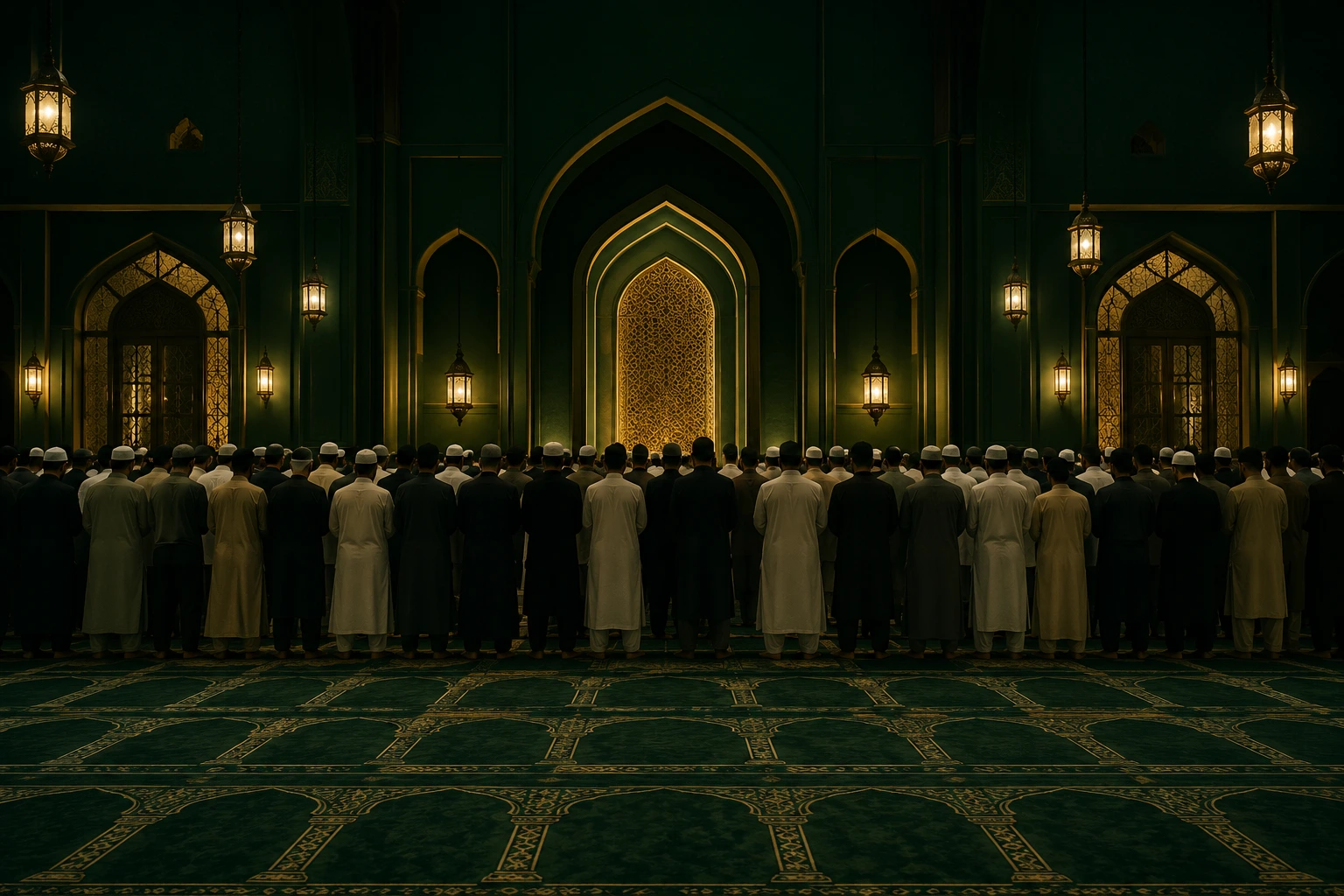
Taraweeh is a special prayer performed only in Ramadan. It consists of multiple rakats, often prayed in congregation at the mosque or individually at home.
Taraweeh comes from an Arabic root meaning “rest” or “relaxation,” as worshippers pause after every four rakats.
Importance of Dua in Taraweeh
Dua is one of the most powerful acts of worship in Islam. During Taraweeh, the heart softens, distractions lessen, and spiritual focus deepens. This makes it an ideal time to:
- Seek forgiveness for past sins.
- Ask for guidance in life.
- Pray for family and loved ones.
- Strengthen faith and patience.
Taraweeh dua reflects complete reliance on Allah during the peaceful Ramadan nights.
When to Recite Taraweeh Dua
There is no fixed dua during Taraweeh, but Muslims often recite supplications:
- After every four rakats
- During sujood (prostration)
- After completing the full Taraweeh prayer
Above all, sincerity and focus matter most in dua.
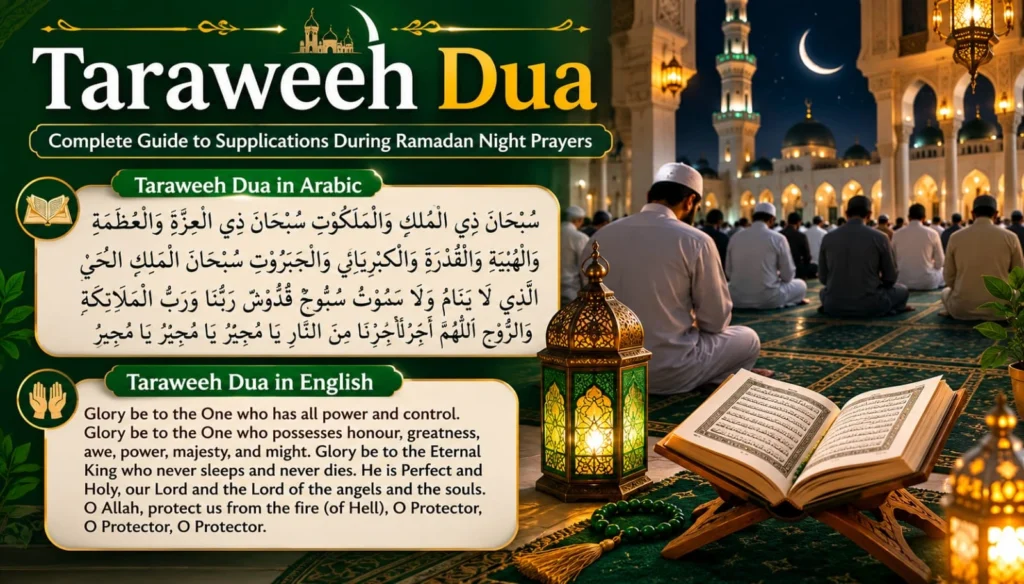
Taraweeh Dua in Arabic
سُبْحَانَ ذِي الْمُلْكِ وَالْمَلَكُوْتِ سُبْحَانَ ذِي الْعِزَّةِ وَالْعَظَمَةِ وَالْهَيْبَةِ وَالْقُدْرَةِ وَالْكِبْرِيَائِ وَالْجَبَرُوتِ سُبْحَانَ الْمَلِكِ الْحَيِ الَّذِي لَا يَنَامُ وَلَا يَمُوْتُ سُبُّوحٌ قُدُّوسٌ رَبُّنَا وَرَبُّ الْمَلَائِكَةِ وَالرُّوْحِ اللَّهُمَّ أَجِرْنَا مِنَ النَّارِ يَا مُجِيْرُ يَا مُجِيْرُ يَا مُجِيرٍ
Taraweeh Dua in English
Glory be to the One who has all power and control. Glory be to the One who possesses honour, greatness, awe, power, majesty, and might. Glory be to the Eternal King who never sleeps and never dies. He is Perfect and Holy, our Lord and the Lord of the angels and the souls. O Allah, protect us from the fire (of Hell), O Protector, O Protector, O Protector.
Taraweeh Dua in Urdu
تمام بادشاہی اور ملکیت والے اللہ پاک ہیں، عزت، عظمت، ہیبت، قدرت، کبریائی اور جلال والے اللہ پاک ہیں۔ وہ زندہ بادشاہ ہیں جو نہ سوتے ہیں اور نہ کبھی وفات پاتے ہیں۔ وہ پاک اور مقدس ہیں، ہمارے رب اور فرشتوں اور روح کے رب ہیں۔ اے اللہ! ہمیں جہنم کی آگ سے بچا، اے پناہ دینے والے، اے پناہ دینے والے، اے پناہ دینے والے۔
Taraweeh Dua in Hindi
सारी बादशाही और शक्ति वाले अल्लाह पाक हैं। इज़्ज़त, महानता, रौब, ताकत और बुलंदी वाले अल्लाह पाक हैं। वह हमेशा ज़िंदा रहने वाले बादशाह हैं, जो न सोते हैं और न मरते हैं। वे पाक और पवित्र हैं, हमारे रब और फरिश्तों तथा रूह के रब हैं। हे अल्लाह! हमें जहन्नम की आग से बचा, हे रक्षक, हे रक्षक, हे रक्षक।
Spiritual Benefits of Taraweeh Dua
Reciting the dua during Taraweeh brings many spiritual benefits:
- Strengthens your relationship with Allah
- Brings peace and calmness to the heart
- Increases forgiveness in Ramadan
- Helps develop discipline and mindfulness
- Brings hope and positivity in life
For students learning Islamic studies or memorisation through an Online Quran Academy in the UK, understanding these duas also improves pronunciation and spiritual connection.
Common Mistakes People Make
Many people unknowingly make mistakes during Taraweeh, such as:
- Rushing through prayers without focus
- Reciting without understanding the meaning
- Treating it as a ritual instead of worship
- Neglecting sincerity in dua
Avoiding these mistakes can enhance your spiritual experience.
Conclusion
Taraweeh is a beautiful gift of Ramadan that allows Muslims to reconnect with Allah in a deep and meaningful way. The Taraweeh dua is not just a set of words; it is a heartfelt conversation with the Creator. Whether recited in Arabic, English, Urdu, or Hindi, the essence remains the same: seeking Allah’s mercy, protection, and guidance.
Pray during the nights of Ramadan with sincerity and understanding to connect deeply with Allah. Start tonight, commit to making dua with focus and heart during Taraweeh, and inspire others to join you. Take this opportunity to deepen your spiritual connection this Ramadan.
FAQs
1. What is the Taraweeh Dua?
The Taraweeh Dua is a prayer in Ramadan that asks Allah for mercy, protection, and forgiveness.
2. When should I recite the Taraweeh Dua?
There is no fixed time for reciting the Taraweeh Dua. Many choose to recite it after every four rakats or after completing Taraweeh, but personal duas can be made at any time.
3. Can I recite the Taraweeh Dua in English or another language?
Yes, you can recite the Taraweeh Dua in any language you understand. While Arabic is preferred, using your own language can enhance reflection.
4. Is reciting the Taraweeh Dua mandatory?
No, reciting the Taraweeh Dua is not mandatory. The Taraweeh prayer is valid without it, though making dua in Ramadan is encouraged.
5. What are the benefits of reciting the Taraweeh Dua?
Reciting the Taraweeh Dua helps strengthen your connection with Allah, increase focus, bring peace, and seek forgiveness during Ramadan.