Islam guides believers to face both joy and hardship with faith, patience, and trust in Allah. The phrase “Innalillahiwainnailaihirojiun” is often recited during times of loss and difficulty.
This phrase offers comfort, reminds us of the world’s temporary nature, and strengthens our connection to Allah. It is commonly heard when someone passes away, but many people wonder about its exact meaning, when it should be said, and the lessons it teaches.
This guide covers the meaning, significance, benefits, and occasions for reciting Innalillahiwainnailaihirojiun.
What Is Innalillahiwainnailaihirojiun?
“Innalillahiwainnailaihirojiun” comes from the Quran and expresses faith and submission to Allah’s will.
Surah Al-Baqarah features this phrase, in which Allah praises those who remain patient during trials and difficulties. When believers recite these words, they acknowledge that everything belongs to Allah and that every soul will ultimately return to Him.
This understanding helps Muslims face grief with patience, gratitude, and hope in Allah’s mercy.
Innalillahiwainnailaihirojiun Meaning
The phrase means humans are Allah’s creation, and our return to Him is inevitable.
It expresses acceptance of Allah’s decree. Whether loss means death, financial hardship, illness, or another trial, these words remind believers of Allah’s perfect wisdom.
The complete transliteration is:
Inna lillahi wa inna ilayhi raji’un
Muslims recite it to affirm faith and seek strength in difficult times.
Innalillahiwainnailaihirojiun Meaning in English
The English translation of the phrase is:
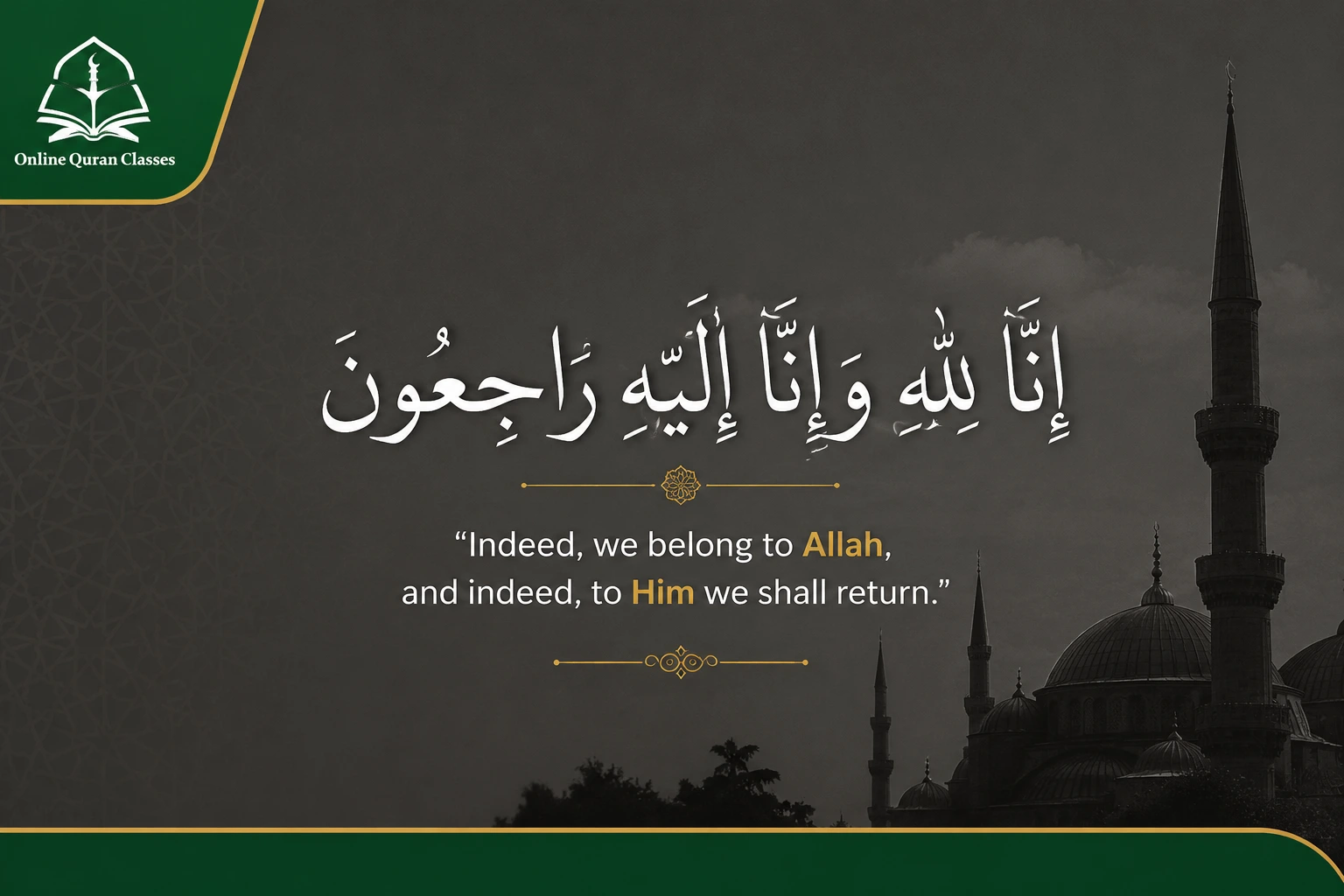
“Indeed, we belong to Allah, and indeed, to Him we shall return.”
This translation reflects two fundamental Islamic beliefs:
- Allah is the Creator and Owner of everything.
- Every human being will return to Allah after death.
These words urge patience and trust in Allah’s plan, even when life’s difficulties are not understood.
Innalillahiwainnailaihirojiun Meaning in Arabic
The phrase in Arabic is written as:
إِنَّا لِلَّٰهِ وَإِنَّا إِلَيْهِ رَاجِعُونَ
This Quranic phrase has deep spiritual meaning.
Breaking it down:
- إِنَّا (Inna): Indeed, we.
- لِلَّٰهِ (Lillahi): Belong to Allah.
- وَإِنَّا (Wa inna): And indeed, we.
- إِلَيْهِ (Ilayhi): To Him.
- رَاجِعُونَ (Raji’un): Will return.
The phrase reminds believers of their origin and destination.
Innalillahiwainnailaihirojiun Meaning in Urdu
In Urdu, the meaning of the phrase is:
“بے شک ہم اللہ ہی کے ہیں اور بے شک ہم اسی کی طرف لوٹ کر جانے والے ہیں۔”
Urdu-speaking communities use this translation when expressing condolences or responding to tragic news.
It reminds us that every blessing and soul is a trust from Allah, who can reclaim what is His.
Innalillahiwainnailaihirojiun Meaning in Hindi
The Hindi meaning of the phrase is:
“निश्चय ही हम अल्लाह के हैं और निश्चय ही हमें उसी की ओर लौटकर जाना है।”
This translation emphasises acceptance of Allah’s decree and encourages believers to remain steadfast during times of hardship.
The phrase reassures us that worldly life is temporary and the hereafter is eternal.
When Should You Say Innalillahiwainnailaihirojiun?
Many associate this phrase with death, but Islamic teachings recommend reciting it during any hardship or loss.
Examples include:
- Hearing news of someone’s passing.
- Losing a loved one.
- Facing illness or injury.
- Experiencing financial difficulties.
- Losing valuable possessions.
- Encountering unexpected setbacks.
By reciting this phrase, Muslims respond with patience rather than despair.
Benefits of Saying Innalillahiwainnailaihirojiun
1. Strengthens Faith
The phrase reminds believers that Allah controls all affairs and that His wisdom surpasses human understanding.
2. Encourages Patience
Instead of reacting with anger or hopelessness, Muslims are encouraged to show sabr (patience).
3. Brings Emotional Comfort
When believers acknowledge Allah’s decree, they find peace in difficult times and ease their grief.
4. Earns Reward From Allah
Believers who respond to trials with faith and patience receive great rewards.
5. Reminds Us of the Hereafter
The phrase moves focus from temporary concerns to eternal life.
Lessons We Learn From This Phrase
Innalillahiwainnailaihirojiun teaches several important life lessons:
Life Is Temporary
All we possess is temporary; even loved ones are trusted by Allah.
Allah’s Wisdom Is Perfect
Even when we don’t understand, believers trust that Allah knows best.
Patience Leads to Reward
Islam promises that patient believers are noticed and rewarded by Allah.
We Will Return to Allah
Remembering death inspires good deeds and preparation for the hereafter.
Teaching Children the Meaning
Parents and educators should explain the phrase to children in a gentle, appropriate way.
Children can be taught that:
- Allah loves and cares for His creation.
- Difficult moments are part of life.
- Turning to Allah brings comfort.
- Patience is a virtue, rewarded by Allah.
Many families teach these values through regular Islamic learning, including online Quran classes for kids in the UK, helping children understand Quranic teachings and supplications.
Conclusion
Innalillahiwainnailaihirojiun is far more than a phrase recited after hearing news of death. It is a powerful declaration of faith, humility, and trust in Allah. By acknowledging that we belong to Allah and will ultimately return to Him, believers find the strength to endure trials with patience and hope.
Whether spoken during times of personal loss or hardship, or in reflections on life’s temporary nature, these words serve as a timeless reminder of our relationship with our Creator. They encourage us to remain steadfast, seek Allah’s mercy, and prepare for the eternal life that awaits beyond this world.
FAQs
1. What does Innalillahiwainnailaihirojiun mean?
Innalillahiwainnailaihirojiun means, “Indeed, we belong to Allah, and to Him we shall return.” This Quranic phrase reminds Muslims that everything belongs to Allah and each soul returns to Him.
2. What is the Arabic text of Innalillahiwainnailaihirojiun?
The phrase in Arabic is:
إِنَّا لِلَّٰهِ وَإِنَّا إِلَيْهِ رَاجِعُونَ
It appears in Surah Al-Baqarah (2:156).
3. When should Muslims say Innalillahiwainnailaihirojiun?
Muslims often recite this phrase after hearing of a death or during any difficulty, such as illness, financial loss, or other challenges.
4. Is Innalillahiwainnailaihirojiun only for death?
No. While often linked to death, Islamic teachings encourage saying it during any trial, loss, or setback.
5. What is the English translation of Innalillahiwainnailaihirojiun?
The English translation is:
“Indeed, we belong to Allah, and indeed, to Him we shall return.”
This shows acceptance of Allah’s decree.
6. What should you say after Innalillahiwainnailaihirojiun?
A recommended supplication is:
“Allahumma’jurni fi musibati wakhluf li khayran minha.”
It means: “O Allah, reward me in my affliction and replace it with something better.”
7. Is Innalillahiwainnailaihirojiun mentioned in the Quran?
Yes. It is in Surah Al-Baqarah (2:156), where Allah praises patient believers who say this phrase in hardship.
8. What are the benefits of saying Innalillahiwainnailaihirojiun?
Benefits include: Strengthened faith, encouraged patience, emotional comfort, divine rewards, and reminders of the Hereafter.
- Encouraging patience during trials.
- Bringing emotional comfort.
- Earning rewards from Allah.
- Reminding believers of the Hereafter.
9. How do you pronounce Innalillahiwainnailaihirojiun correctly?
The correct transliteration is:
Inna lillahi wa inna ilayhi raji’un
Pronunciation: In-na lil-LAH-hi wa in-na i-LAY-hi raa-jee-oon.
10. Can children learn and recite Innalillahiwainnailaihirojiun?
Yes. Children can learn this phrase early. Teaching its meaning encourages patience, trust in Allah, and seeking Him in times of difficulty.