Islamic greetings and supplications carry deep meanings and reflect the values of kindness, gratitude, and brotherhood. One such beautiful expression is Barakallahu Feekum. Muslims around the world frequently use this phrase when thanking someone, making dua, or expressing appreciation for a good deed.
Understanding the meaning of Barakallahu Feekum can help Muslims use it correctly in daily conversations and appreciate its spiritual significance. In this article, we will explore its Arabic meaning, English translation, usage, responses, and examples.
What Does Barakallahu Feekum Mean?
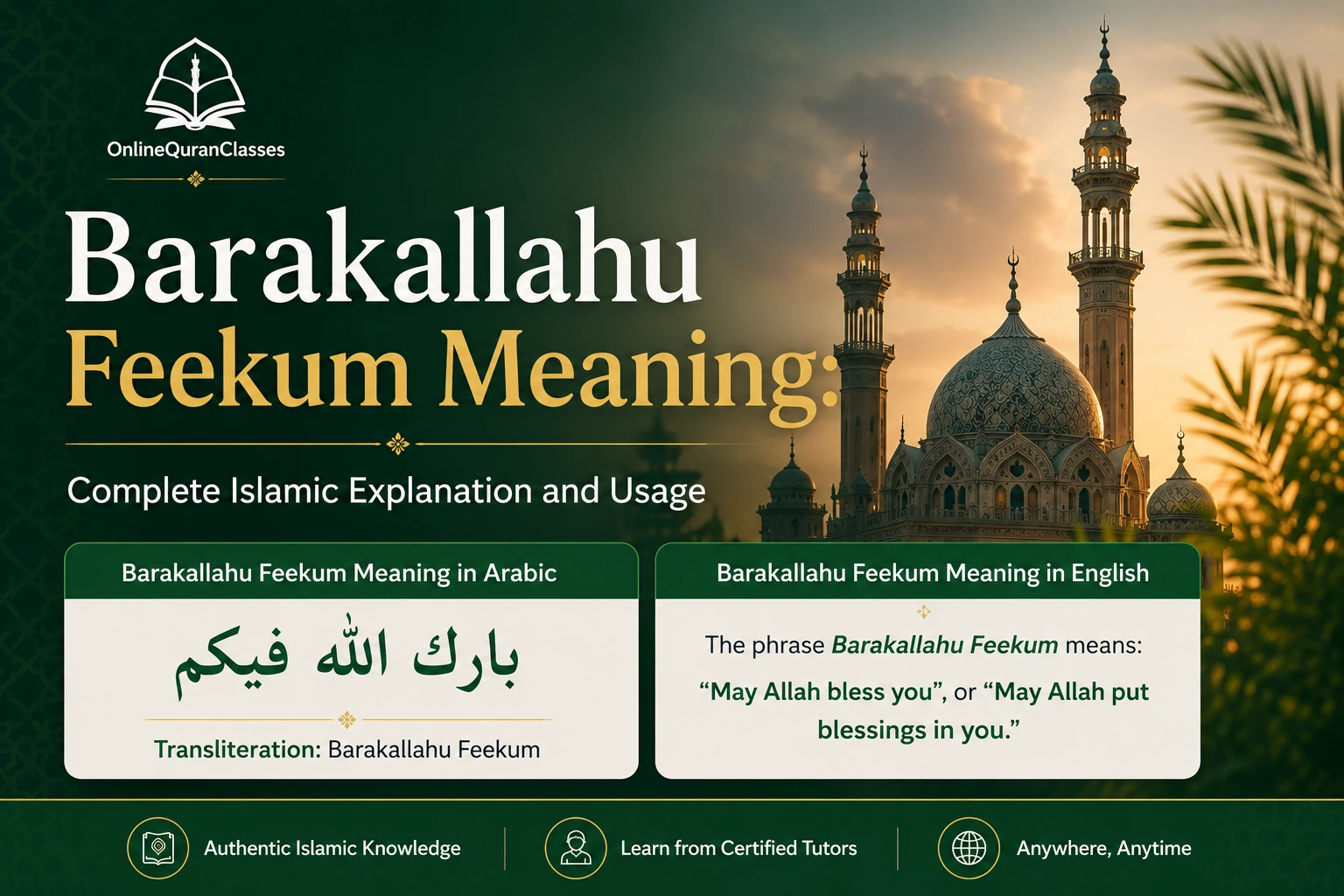
Barakallahu Feekum Meaning in Arabic
بارك الله فيكم
Transliteration: Barakallahu Feekum
Barakallahu Feekum Meaning in English
The phrase Barakallahu Feekum means:
“May Allah bless you”, or “May Allah put blessings in you.”
It is a dua asking Allah to send blessings, mercy, and goodness to the person you address.
Breaking Down the Meaning of Barakallahu Feekum
To understand the phrase more deeply, it helps to examine each word individually.
| بارك | Baraka | Blessed or granted blessings |
| الله | Allah | Allah (God) |
| فيكم | Feekum | In you (plural or respectful form) |
Combined, the phrase means:
“May Allah bless you.”
It is considered a supplication (dua), not just a greeting.
Why Muslims Say Barakallahu Feekum
Muslims are encouraged to make dua for each other. Instead of just saying “thank you,” many use a prayer asking Allah to reward the other person.
The phrase is commonly used:
- To express gratitude
- To appreciate help or support
- To thank someone for sharing Islamic knowledge
- To respond to kindness
- To encourage good deeds
By saying Barakallahu Feekum, a Muslim acknowledges the person’s action and prays for blessings.
When to Use Barakallahu Feekum
This phrase is appropriate for many situations.
1. After Receiving Help
If someone assists you with a task, you may say:
“JazakAllahu Khairan, Barakallahu Feekum.”
Meaning:
“May Allah reward you with goodness and bless you.”
2. After Benefiting from Islamic Knowledge
When a scholar, teacher, or friend shares useful Islamic advice, people often respond with:
“Barakallahu Feekum.”
This shows appreciation and includes a prayer for blessings.
3. During Community Activities
Whether someone donates to charity, volunteers at a mosque, or helps organise an event, this phrase is a beautiful way to show gratitude.
4. In Online Conversations
Many Muslims use Barakallahu Feekum in emails, comments, and online discussions to follow Islamic etiquette.
Difference Between Barakallahu Feek and Barakallahu Feekum
Arabic changes according to the number of people being addressed.
| Barakallahu Feek | بارك الله فيك | One person |
| Barakallahu Feeki | بارك الله فيكِ | One female |
| Barakallahu Feekum | بارك الله فيكم | Multiple people or respectful address |
Though all forms mean “May Allah bless you,” the words change based on who you address.
How to Respond to Barakallahu Feekum
When someone says Barakallahu Feekum to you, there are several appropriate responses.
Common Responses
| Wa Feekum BarakAllah | And may Allah bless you too |
| Wa Feeka BarakAllah | And may Allah bless you as well |
| Ameen | Amen |
| JazakAllahu Khairan | May Allah reward you with goodness |
The most common response is:
“Wa Feekum BarakAllah”
This reciprocates the same dua to the other person.
The Spiritual Significance of Barakallahu Feekum
The concept of barakah (blessing) is central to Islam.
Barakah is not just more wealth or things. It means Allah puts goodness, benefit, peace, or growth into something.
For example:
- A small income with barakah may bring greater happiness than a large income without it.
- A short amount of time with barakah can allow a person to accomplish much more.
- Knowledge with barakah benefits both the learner and others.
By saying Barakallahu Feekum, you ask Allah to give that blessing to someone.
Examples of Barakallahu Feekum in Daily Life
Here are some practical examples.
Example 1
Person A: I shared some notes from today’s Islamic lecture.
Person B: Barakallahu Feekum.
Meaning: May Allah bless you for sharing beneficial knowledge.
Example 2
Person A: I made dua for your family.
Person B: JazakAllahu Khairan, Barakallahu Feekum.
Meaning: May Allah reward and bless you.
Example 3
Teacher: Remember to recite the Quran daily.
Student: Barakallahu Feekum, Shaykh.
Meaning: May Allah bless you for the advice.
Benefits of Using Islamic Expressions
Using Barakallahu Feekum and similar phrases strengthens manners and friendships.
Some benefits include:
- Encouraging gratitude
- Spreading kindness
- Remembering Allah in daily speech
- Building stronger community bonds
- Turning ordinary conversations into acts of worship
These phrases help Muslims stay spiritually connected each day.
Teaching Children the Meaning of Barakallahu Feekum
Parents and teachers can help children use Islamic supplications daily.
Teaching phrases like Barakallahu Feekum helps children:
- Develop good manners
- Learn gratitude
- Strengthen their Islamic identity.
- Understand the importance of making dua for others.
Many parents who enrol their kids in online Quran classes in the UK also encourage them to practice these Islamic expressions alongside Quran learning and character development.
Common Misunderstandings About Barakallahu Feekum
Some people may think Barakallahu Feekum is just another way of saying thank you.
While it can replace “thank you,” it is more meaningful because it includes a heartfelt prayer for blessings.
Some people think it is only for religious settings, but Muslims use it every day with family, friends, coworkers, and the community.
Conclusion
Barakallahu Feekum (بارك الله فيكم) is a beautiful Islamic supplication meaning “May Allah bless you.” It is commonly used to express gratitude, appreciation, and goodwill, while asking Allah to bestow barakah on another person.
More than just a phrase, Barakallahu Feekum reflects the Islamic spirit of kindness, brotherhood, and prayer for others. By understanding its meaning and using it regularly, Muslims can turn everyday conversations into opportunities to earn rewards and spread positivity.
Barakallahu Feekum is meaningful and beloved in Islam, whether you say it after getting help, learning, or seeing a good deed.