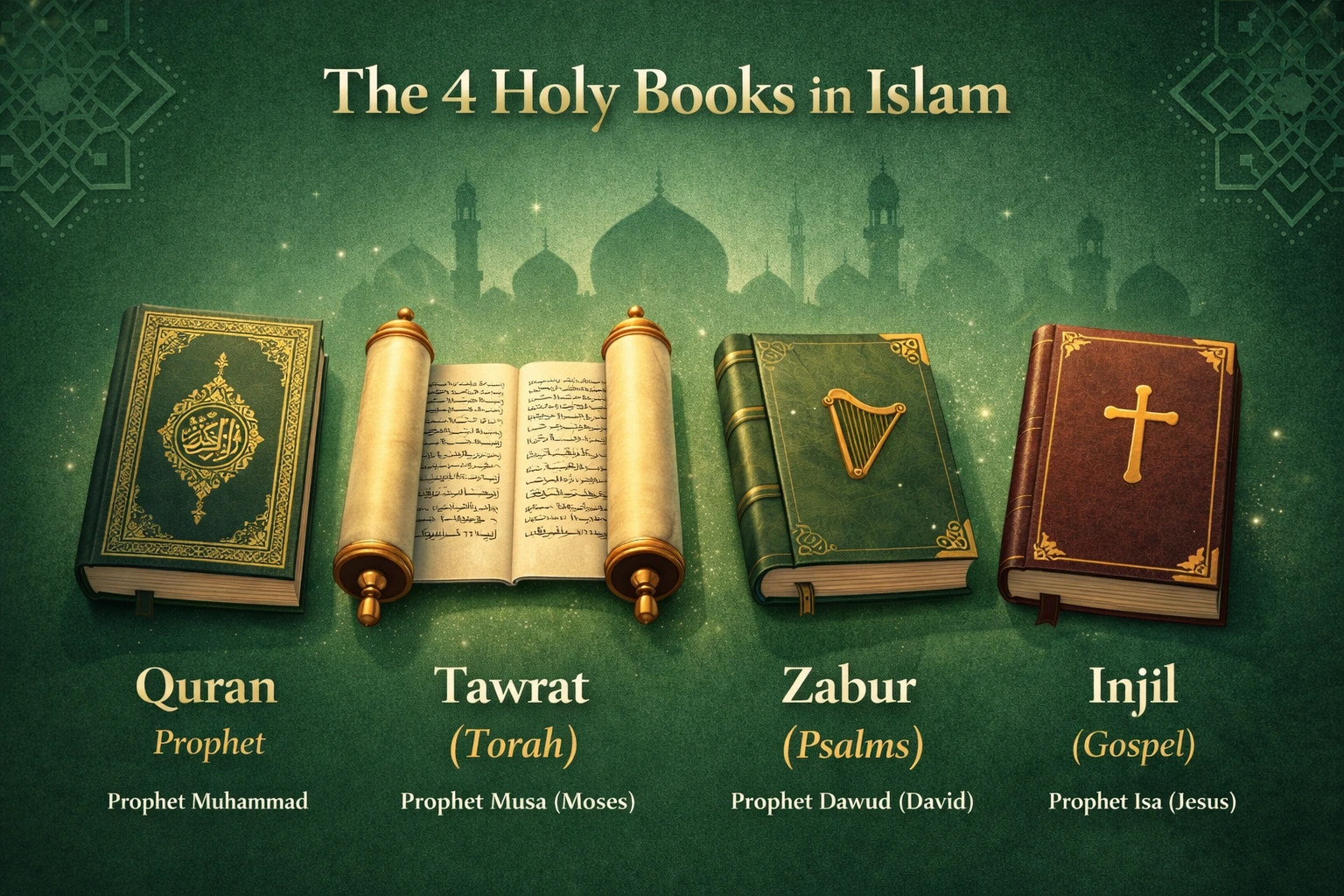
In Islam, guidance for humanity comes not only from the Quran but also from earlier divine scriptures revealed to previous prophets. Muslims believe in 4 Holy Books in Islam: the Quran, Torah, Zabur, and Injil. Each book was sent by Allah to guide people toward righteousness, moral conduct, and faith in one God. Understanding these holy books helps Muslims appreciate the continuity of divine guidance throughout history.
What Are the 4 Holy Books in Islam?
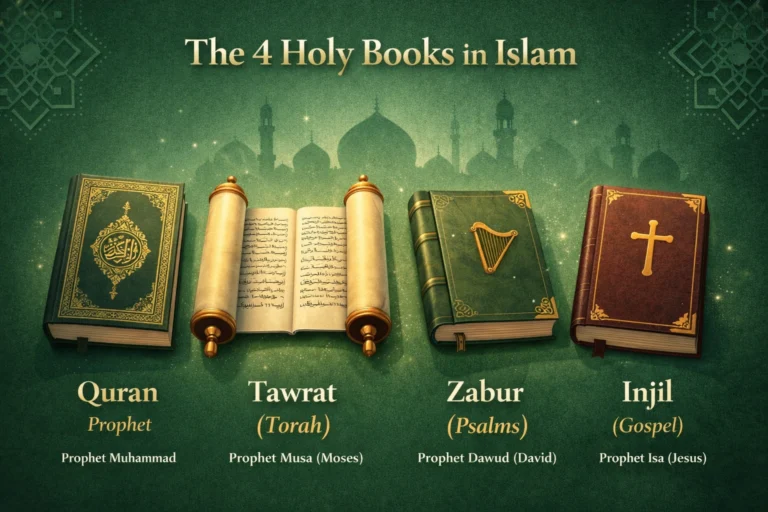
The 4 Holy Books in Islam are considered sacred revelations sent by Allah to different prophets at various points in history. These books serve as instructions, laws, and guidance for humanity:
- The Quran – Revealed to Prophet Muhammad ﷺ, it is the final and complete message from Allah. The Quran confirms the teachings of previous books while providing clear guidance for all aspects of life. It is preserved in its original Arabic language and is the primary source of law, morality, and worship in Islam.
- The Torah (Tawrat) – revealed to Prophet Musa (Moses, peace be upon him)- contains laws and commandments for the Children of Israel. It guided people in their moral, social, and religious duties during their time. The Torah emphasizes justice, honesty, and devotion to Allah.
- The Zabur (Psalms) – Revealed to Prophet Dawud (David, peace be upon him)- is a collection of praises, prayers, and guidance. It focuses on worship, gratitude, and remembrance of Allah. The Zabur encouraged spiritual reflection and reliance on God in everyday life.
- The Injil (Gospel) – Revealed to Prophet Isa (Jesus, peace be upon him)- contained guidance and teachings for the people of his time. It focused on moral conduct, worship of one God, and preparing people for the final message of Allah.
Importance of the 4 Holy Books in Islam
Belief in the 4 Holy Books in Islam is one of the six pillars of Iman (faith) in Islam. This belief signifies respect for all divine guidance sent to humanity. Even though earlier books like the Torah, Zabur, and Injil may have undergone changes over time, Muslims acknowledge that the original revelations were true and came from Allah.
- Quran: The Quran is the final scripture and the most complete of all. It confirms the messages in the previous scriptures and corrects any misinterpretations that might have arisen over time.
- Torah, Zabur, Injil: These books are respected for their original guidance and serve as evidence of Allah’s continuous support for humanity through His prophets.
Lessons from the 4 Holy Books
Each of the 4 Holy Books in Islam offers valuable lessons for believers:
- Quran: Teaches worship of Allah, justice, honesty, compassion, and guidance for daily life.
- Torah: Emphasizes obedience to God’s commandments, social justice, and maintaining strong moral character.
- Zabur: Encourages worship, gratitude, and reliance on Allah in all circumstances.
- Injil: Focuses on mercy, love, and moral conduct while preparing people for the final guidance of the Quran.
By studying these books, Muslims can understand how divine guidance has consistently promoted ethical behavior, social harmony, and spiritual development.
Prophets Associated with the 4 Holy Books
Each holy book in Islam was revealed to a specific prophet chosen by Allah to guide his people:
- Prophet Musa (Moses) – Received the Torah to guide the Children of Israel.
- Prophet Dawud (David) – Received the Zabur, focusing on worship and spiritual reflection.
- Prophet Isa (Jesus) – Received the Injil, teaching morality and the worship of one God.
- Prophet Muhammad ﷺ – Received the Quran, the final and complete message for all humanity.
Muslims honor all these prophets and their messages, recognizing the Quran as the ultimate guidance while respecting the wisdom in earlier books.
Common Misconceptions
Some people misunderstand the role of the 4 Holy Books in Islam:
- Only the Quran Matters: While the Quran is final, Islam respects previous scriptures and acknowledges their original truth.
- Earlier Books Are Preserved in Their Original Forms: Islam recognizes that the Torah, Zabur, and Injil have undergone changes over time. However, the core messages of faith, morality, and worship were originally revealed by God.
Understanding these points helps Muslims appreciate the history and purpose of divine guidance.
Applying Lessons from the 4 Holy Books in Daily Life
The teachings of the 4 Holy Books in Islam are not only historical but also practical:
- Follow moral guidance such as honesty, kindness, and justice.
- Worship Allah with sincerity and devotion.
- Reflect on spiritual teachings to improve character and relationships.
- Respect all prophets and their messages, fostering humility and unity among believers.
By applying these lessons, Muslims can lead a life that aligns with Allah’s guidance and builds strong faith and ethical conduct.
Conclusion
The 4 Holy Books in Islam, the Quran, Torah, Zabur, and Injil, represent Allah’s ongoing guidance for humanity through His chosen prophets. While the Quran remains the final and most complete scripture, understanding the earlier books allows Muslims to appreciate the continuity of divine guidance, learn valuable lessons, and strengthen their faith. By following the teachings of these sacred texts, believers can lead a life of morality, worship, and spiritual growth, truly embodying the message of Islam.